BAKE006 · September 20–September 21, 2026
Sourdough Control Loaf
A straightforward white sourdough boule, a pronounced ear, and a useful lesson in staying out of the dough's way.
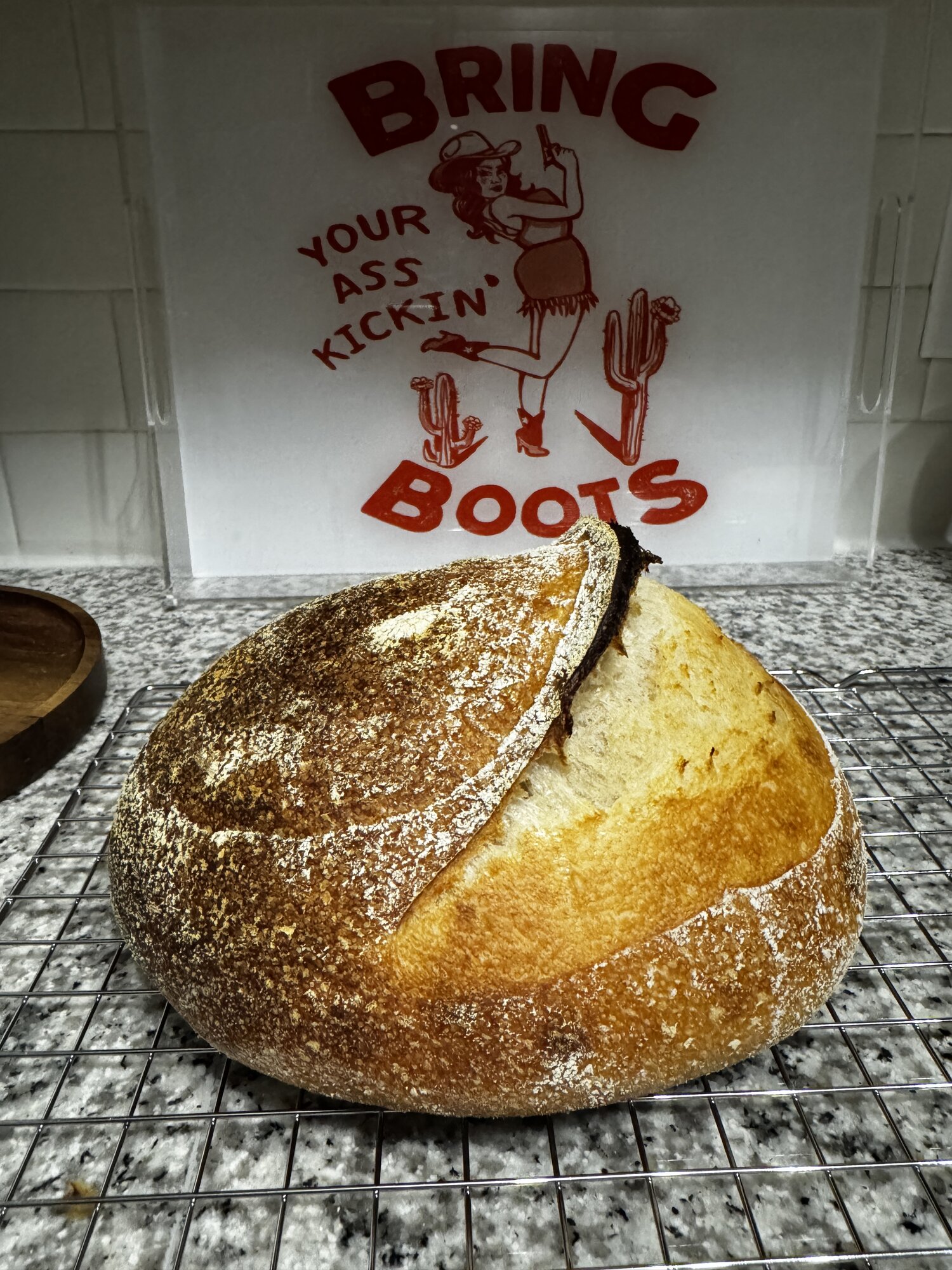
Sometimes you need to stop screwing around and find out whether you can actually make bread.
Bake 006 was the control loaf. No inclusions, no whole wheat, no unusual shaping experiments, no attempt to make sourdough imitate something else. Just a straightforward white sourdough boule meant to establish a baseline: flour, water, starter, salt, fermentation, heat. If something went wrong, there wouldn't be much else to blame.
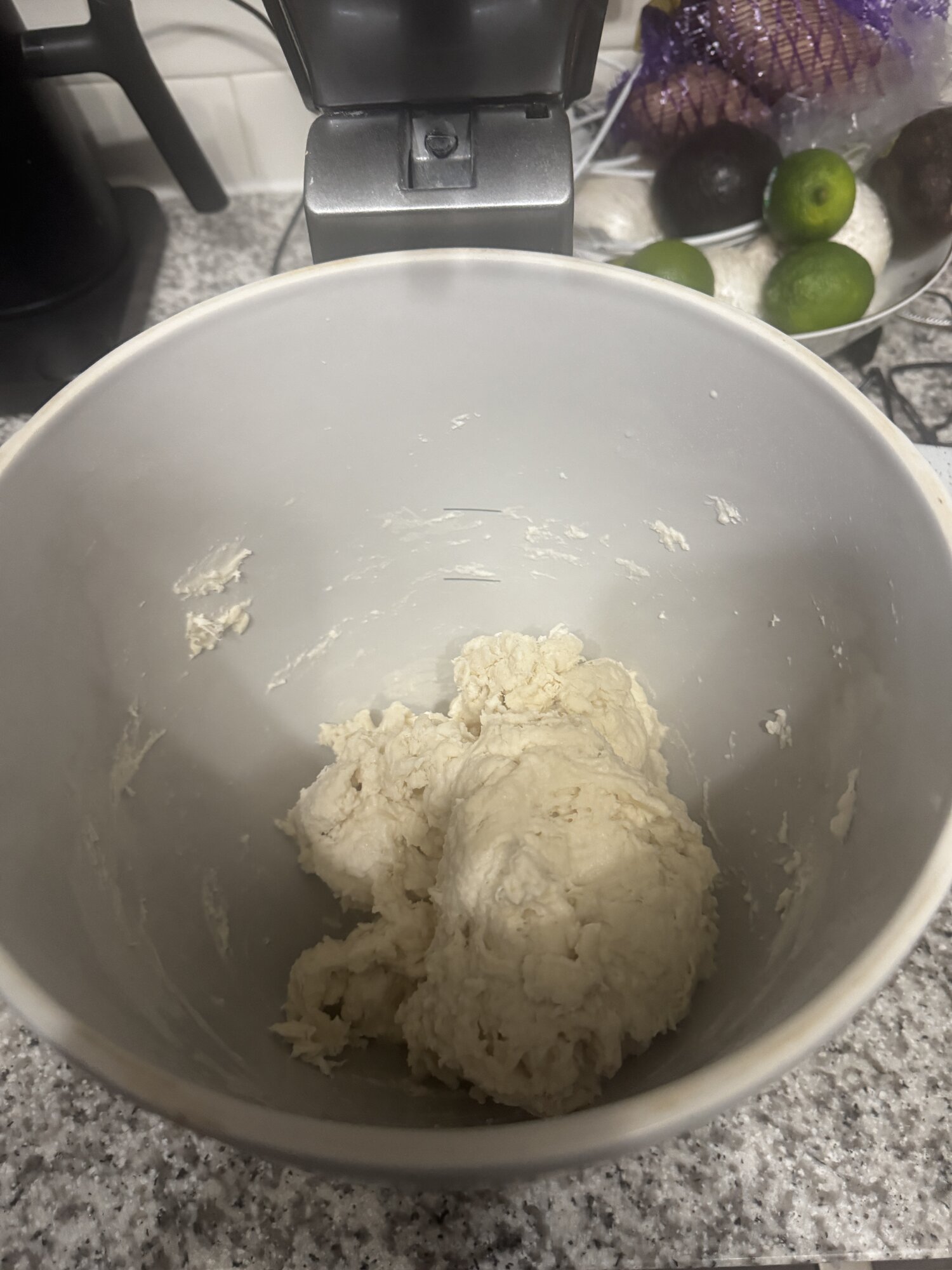
I started at 3:48 pm on September 20 with an autolyse. The dough was exactly what you expect at that point: shaggy, lumpy, and not particularly encouraging to look at.
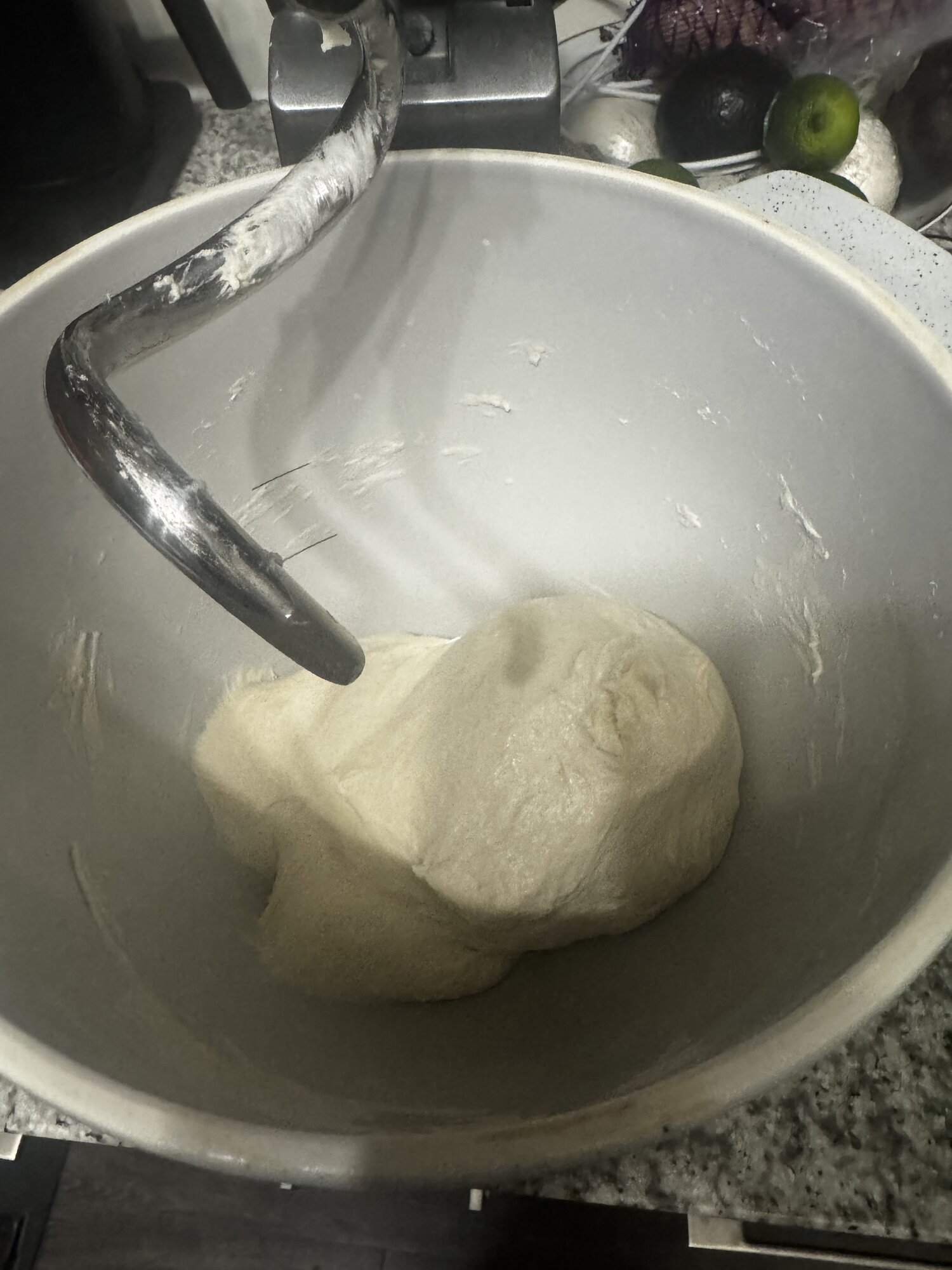
After the remaining ingredients went in and the mixer did its job, it was a completely different dough. Smooth, cohesive, and already showing some decent strength.
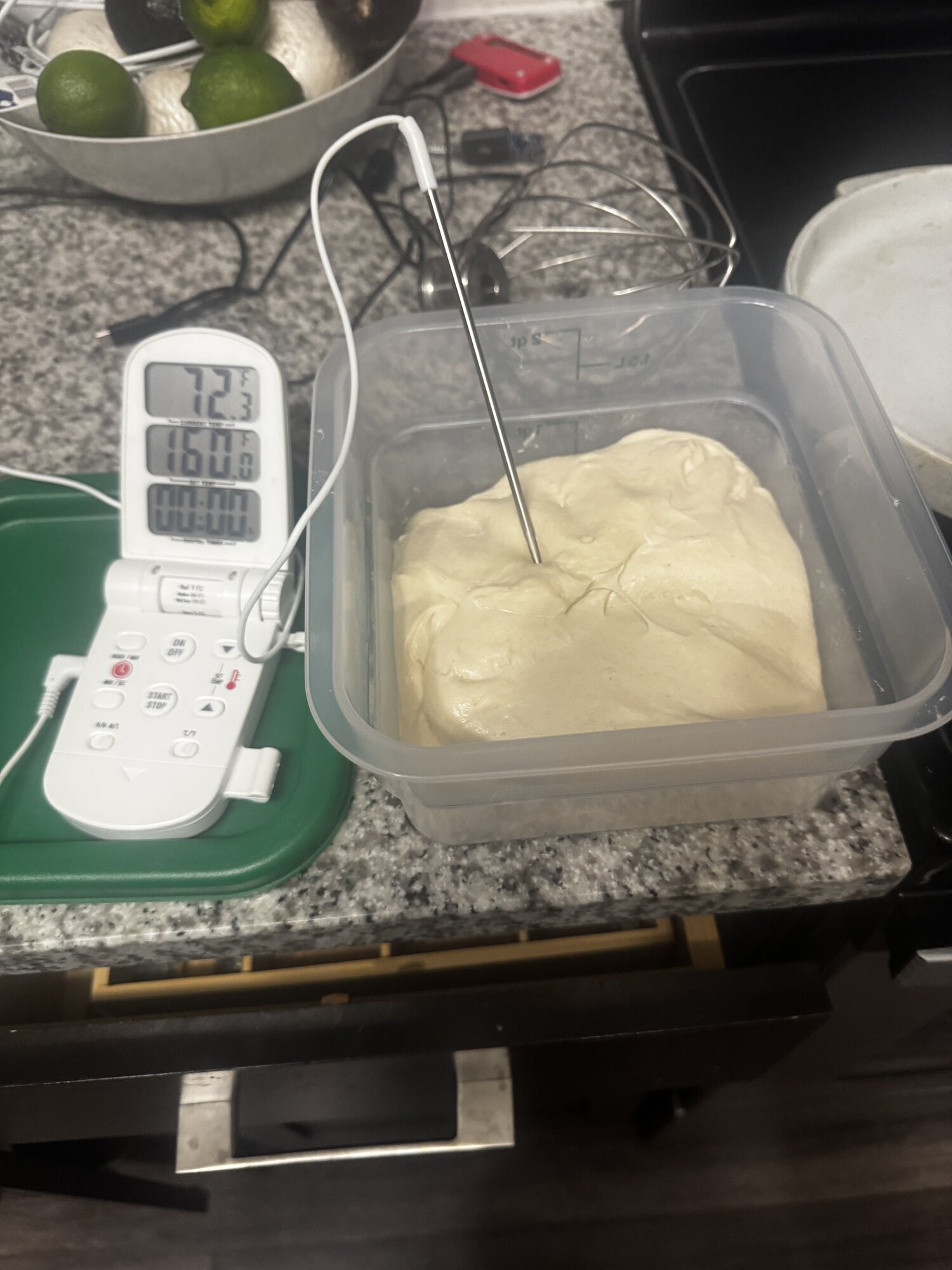
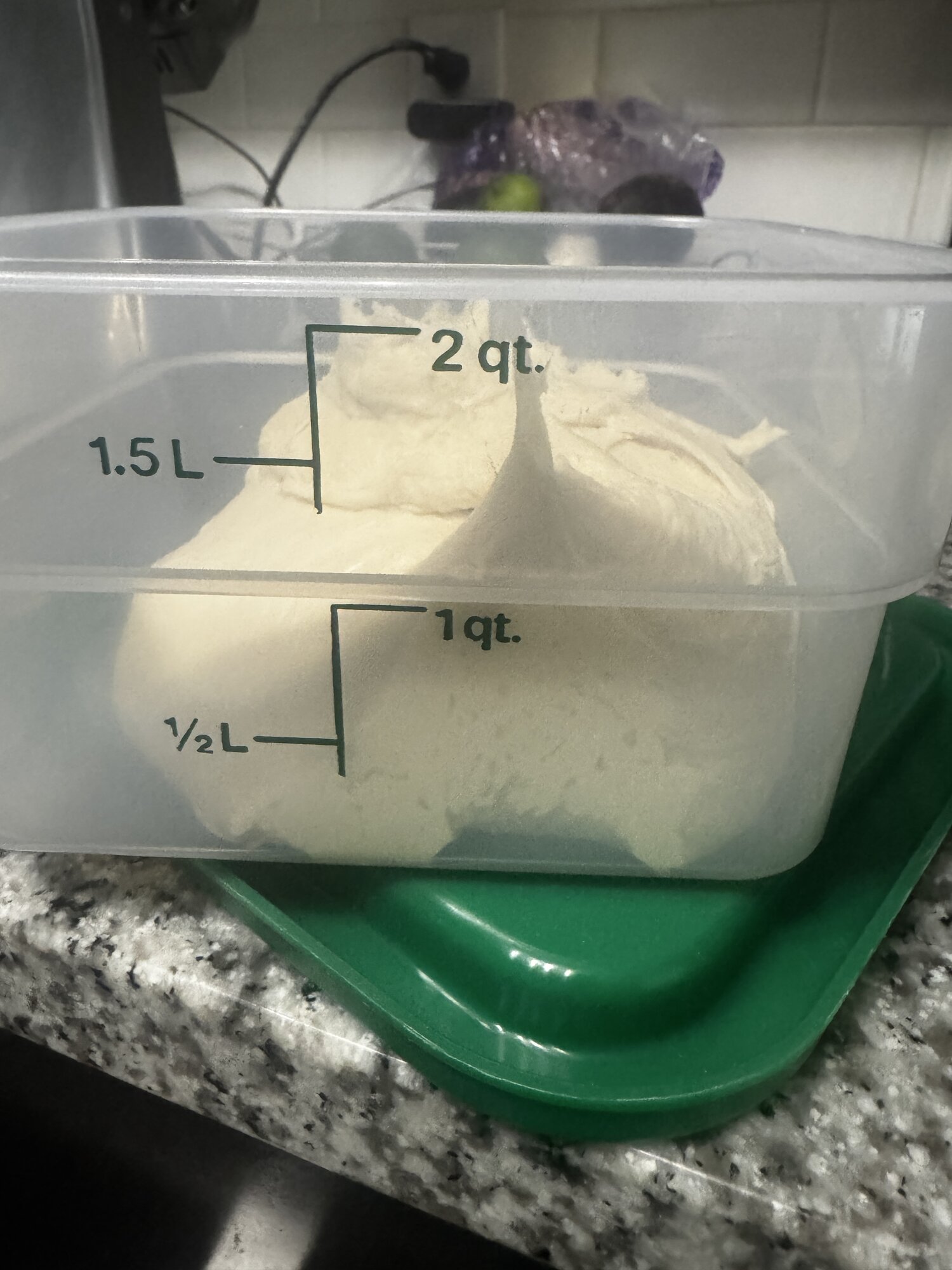
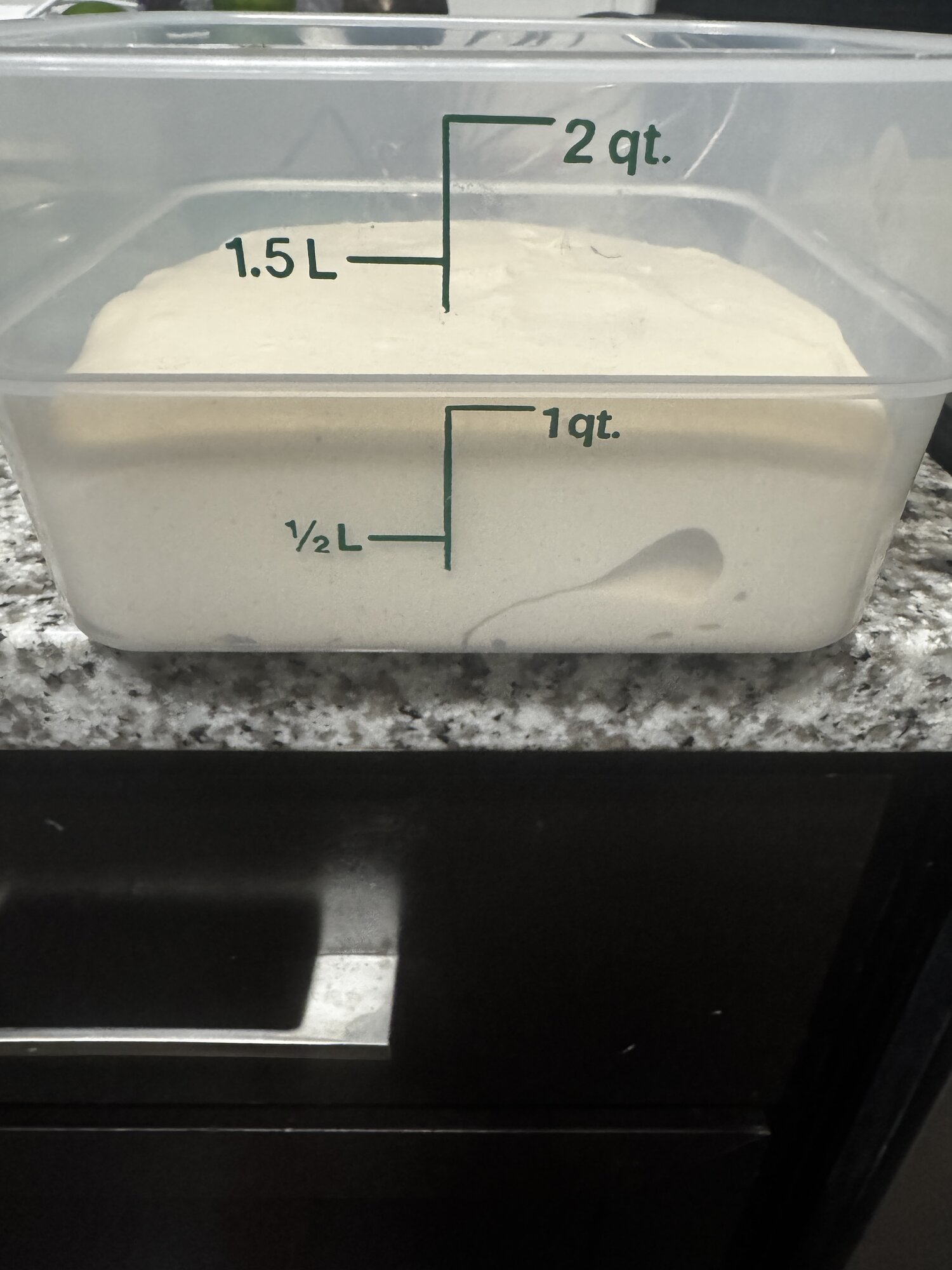
At 4:31 pm, it went into the new 2-quart Cambro for bulk fermentation. This was one of those purchases that immediately justified itself. I've used larger containers before, but with a single loaf there was always too much empty real estate to accurately judge the rise. In the smaller straight-sided container, I could actually see what the dough was doing instead of standing over it trying to perform volumetric geometry.
The original recipe called for lamination.
I ignored that.
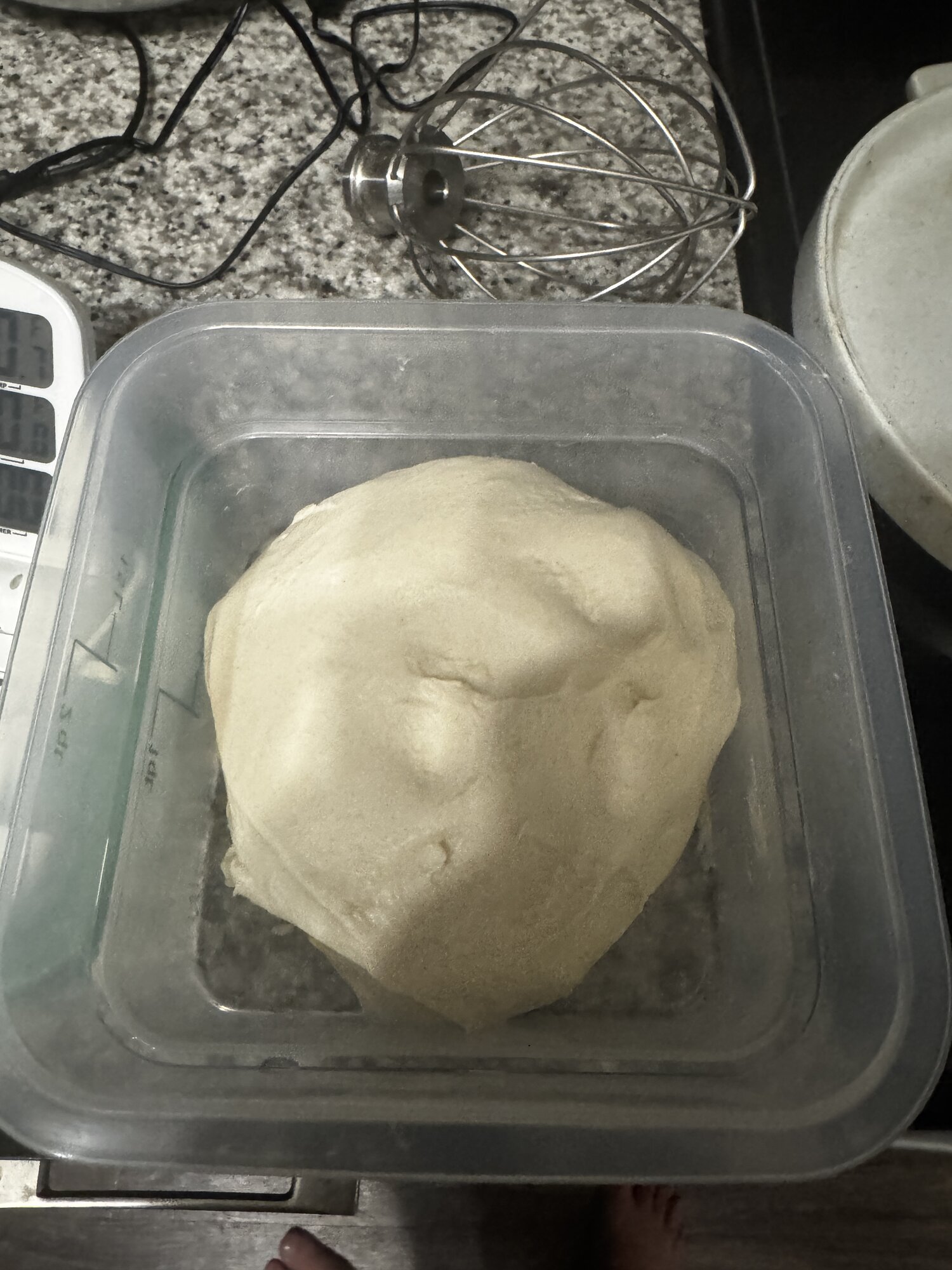
Instead, I did three sets of stretch and folds, roughly half an hour apart. The first was at 4:55 pm, the second at 5:27 pm, and the last at 6:00 pm.
By the second fold the dough was noticeably stronger, and after the third it was smooth, rounded, and holding itself together nicely. Dough temperature during the folds hovered in the low-to-mid 70s, so nothing was moving particularly fast.
Then came the difficult part of sourdough baking: leaving it alone.
By 10:00 pm, about five and a half hours after bulk started, the dough had expanded substantially and filled out the Cambro. It looked inflated without looking exhausted, so I called bulk finished.
For approximately two minutes I considered simply putting the whole container in the refrigerator and dealing with it in the morning.
Then I remembered that Future Brad has historically proven to be unreliable when Present Brad leaves him extra work.
So I shaped it.
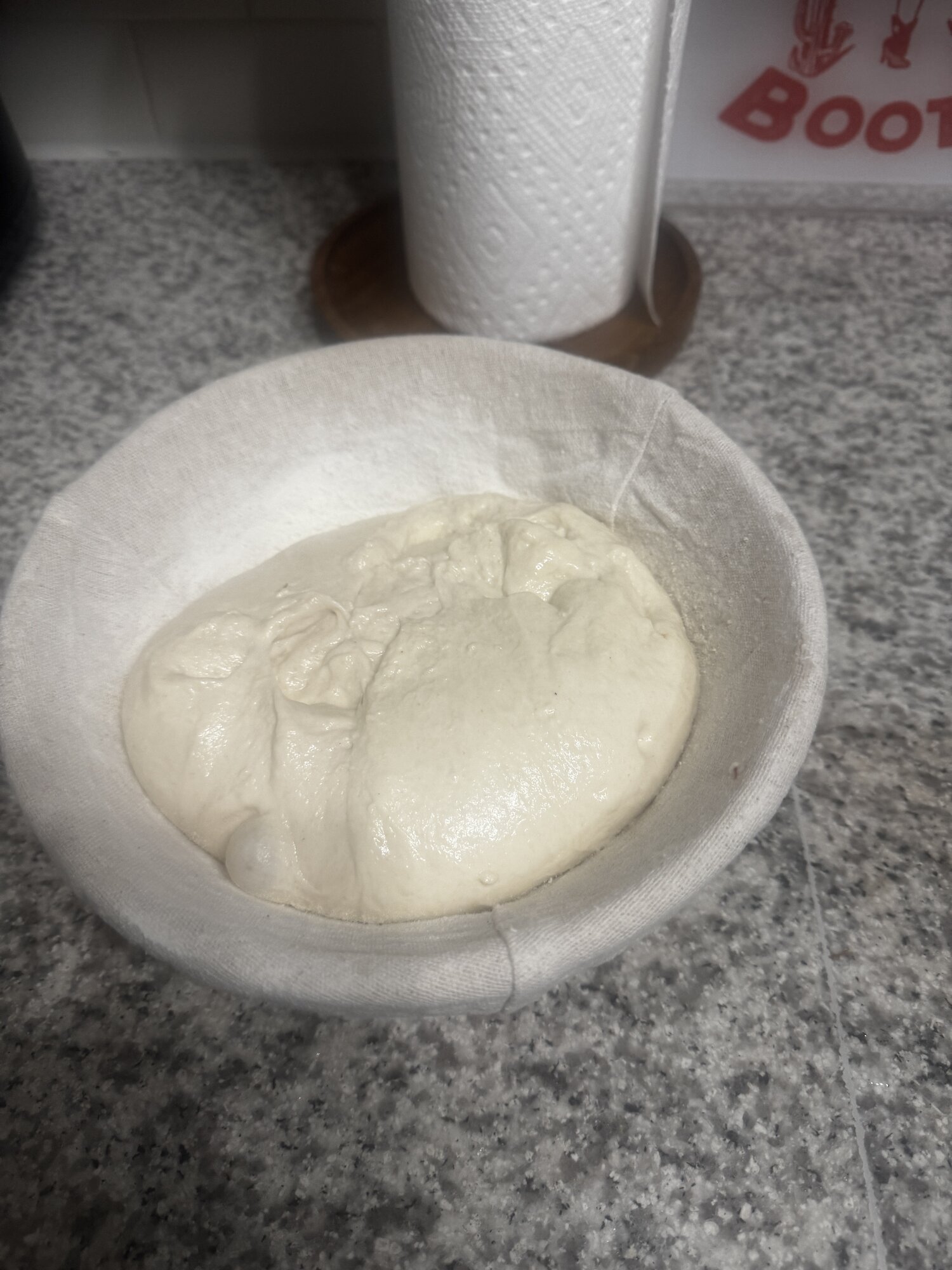
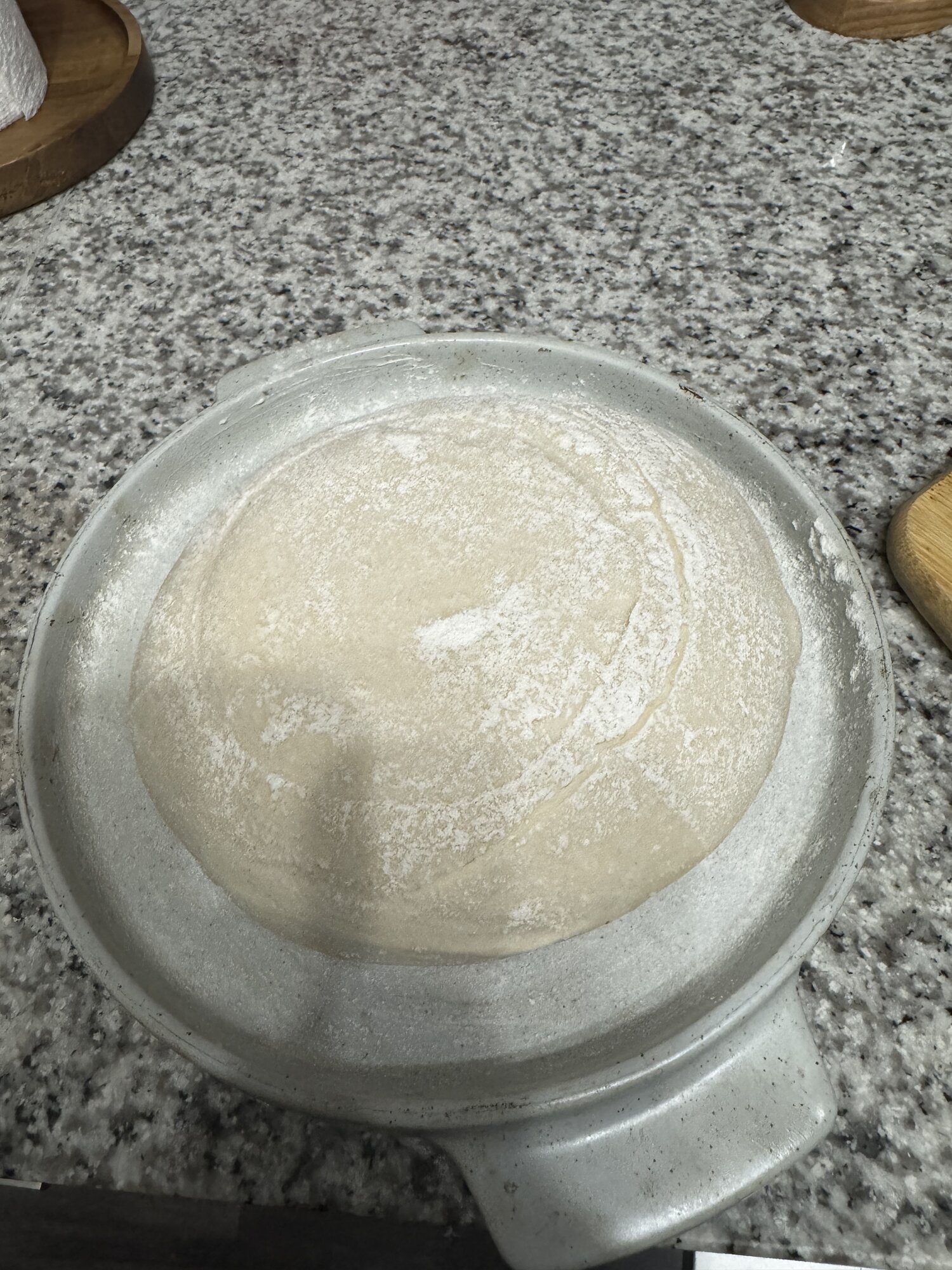
The loaf went into a floured banneton and then into the refrigerator for an overnight cold proof.
The next morning it came out looking considerably more respectable than it had any right to. I turned it out, scored it cold, and baked it straight from the refrigerator.
And then Bake 006 decided to show off.
The loaf had some of the best oven spring I've gotten so far. The score opened dramatically, producing a large, defined ear and a rounded loaf that looked less like one of my experiments and more like something somebody might intentionally put in a bakery window.
Once it cooled, the crumb confirmed that the outside wasn't lying. It was moderately open and irregular, with plenty of smaller cells supporting a handful of larger pockets. There were a couple of oversized holes that were probably introduced during shaping, but there was no dense gummy section and no obvious sign that fermentation had gone badly in either direction.
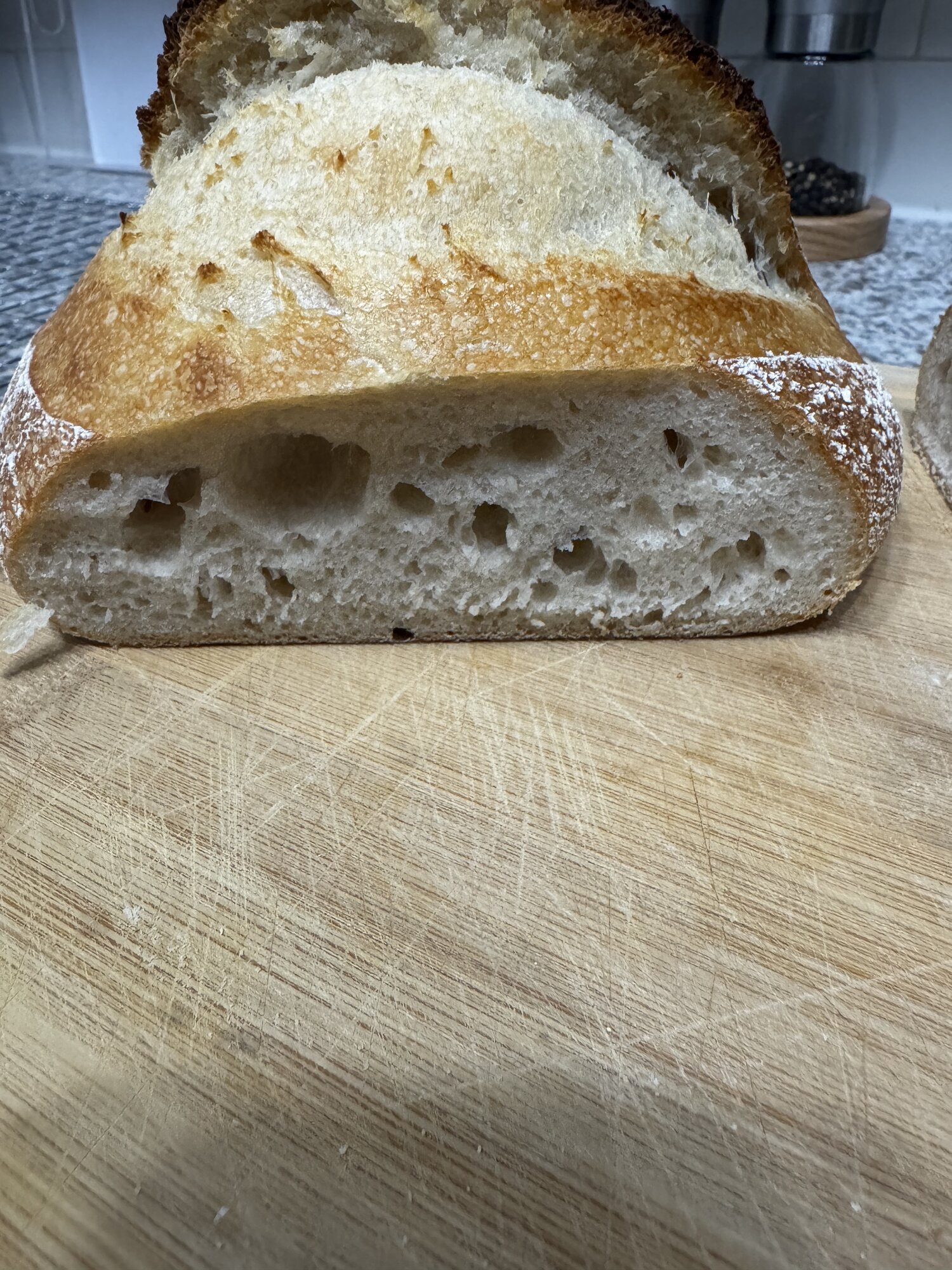
More importantly, it tasted like good sourdough bread.
Which was really the point.
Bake 006 didn't introduce some clever new technique or unusual ingredient. It established a reference point. A simple loaf, fermented at normal room temperature, strengthened with three stretch-and-fold sets, cold-proofed overnight, and baked the next morning.
And now I know what happens when I mostly stay out of the dough's way.
Turns out the bread knows what it's doing.
Score: 9/10
This is probably the best baseline loaf I've made so far. Good fermentation, strong oven spring, a pronounced ear, and a crumb that was open without becoming ridiculous.
A couple of larger holes kept it from being perfect, but there's very little here I'd change.
For a control loaf, that's about as useful a result as I could have hoped for.