BAKE001 · July 29–July 30, 2026
Bread Pitt's First Big Role
Everybody remembers the first loaf... especially the baker.
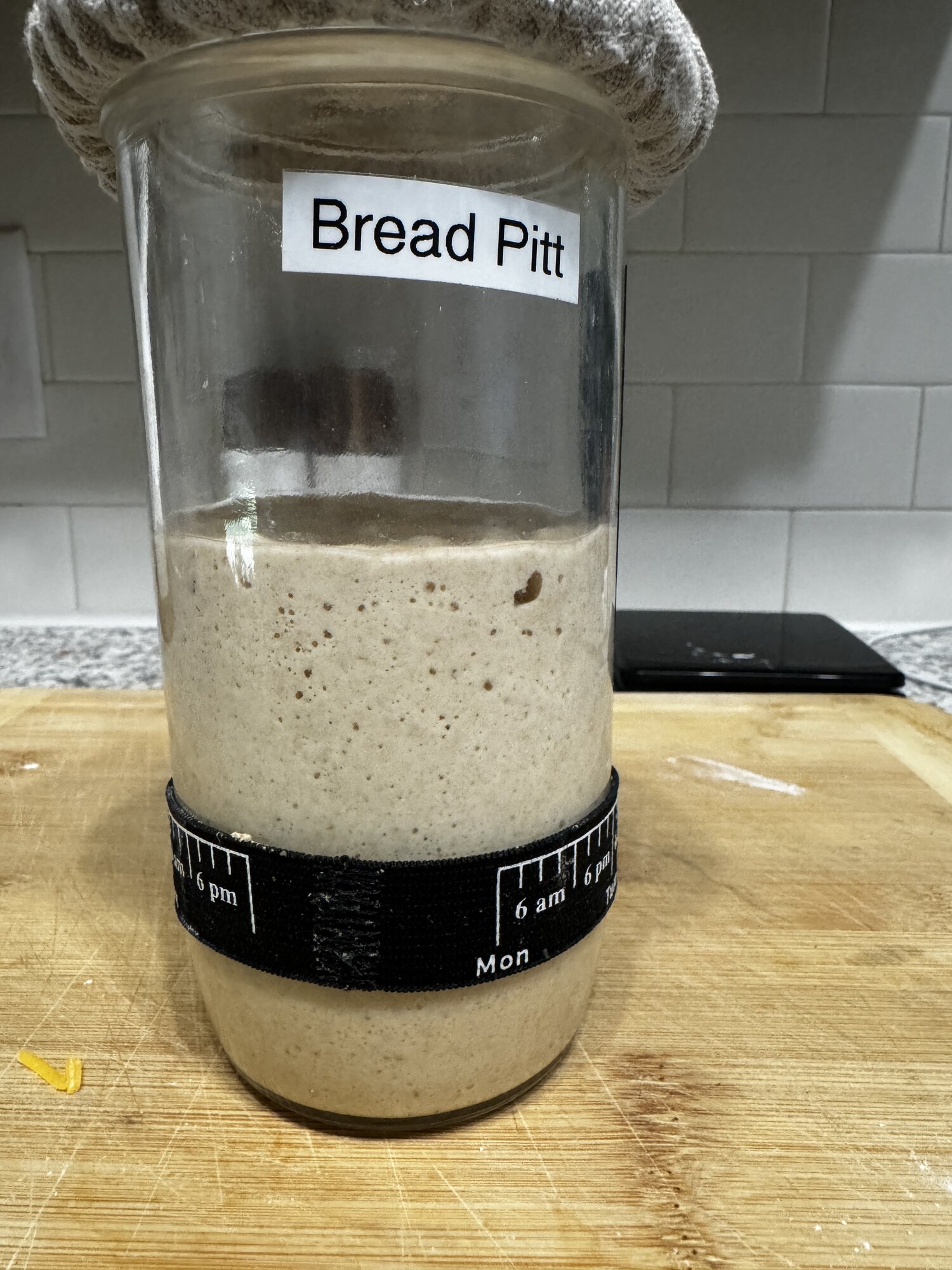
Bread Pitt 2.0 had been alive for a few weeks. If you had been following along, congratulations—you were the first.
Rebooting my Bread Pitt sourdough starter was a bit of a struggle, but he finally made it. You can follow his progress here.
Version 1.0 didn’t survive the move from Florida to Texas, so this wasn’t my first sourdough loaf ever. I’ve baked quite a few over the years. Some were pretty good. Some... well... let’s just say they still made decent toast.
I wasn’t expecting the perfect Instagram loaf. I was just trying to get Bread Pitt back in the game.
I fed him at about 4:40 in the morning, and around 2:00 that afternoon, I decided he was as ready as he was going to get.
Enter Dough Cloony
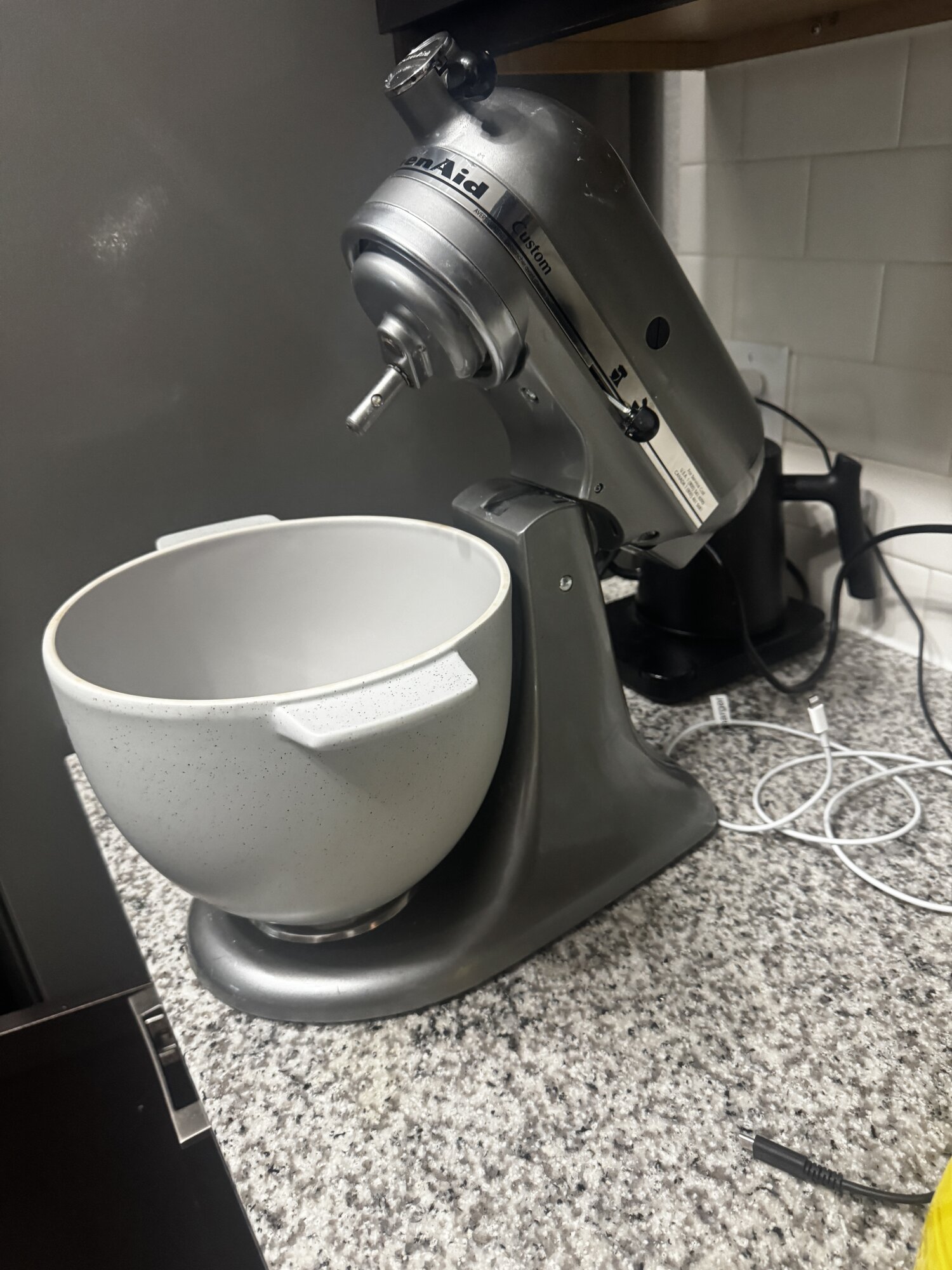
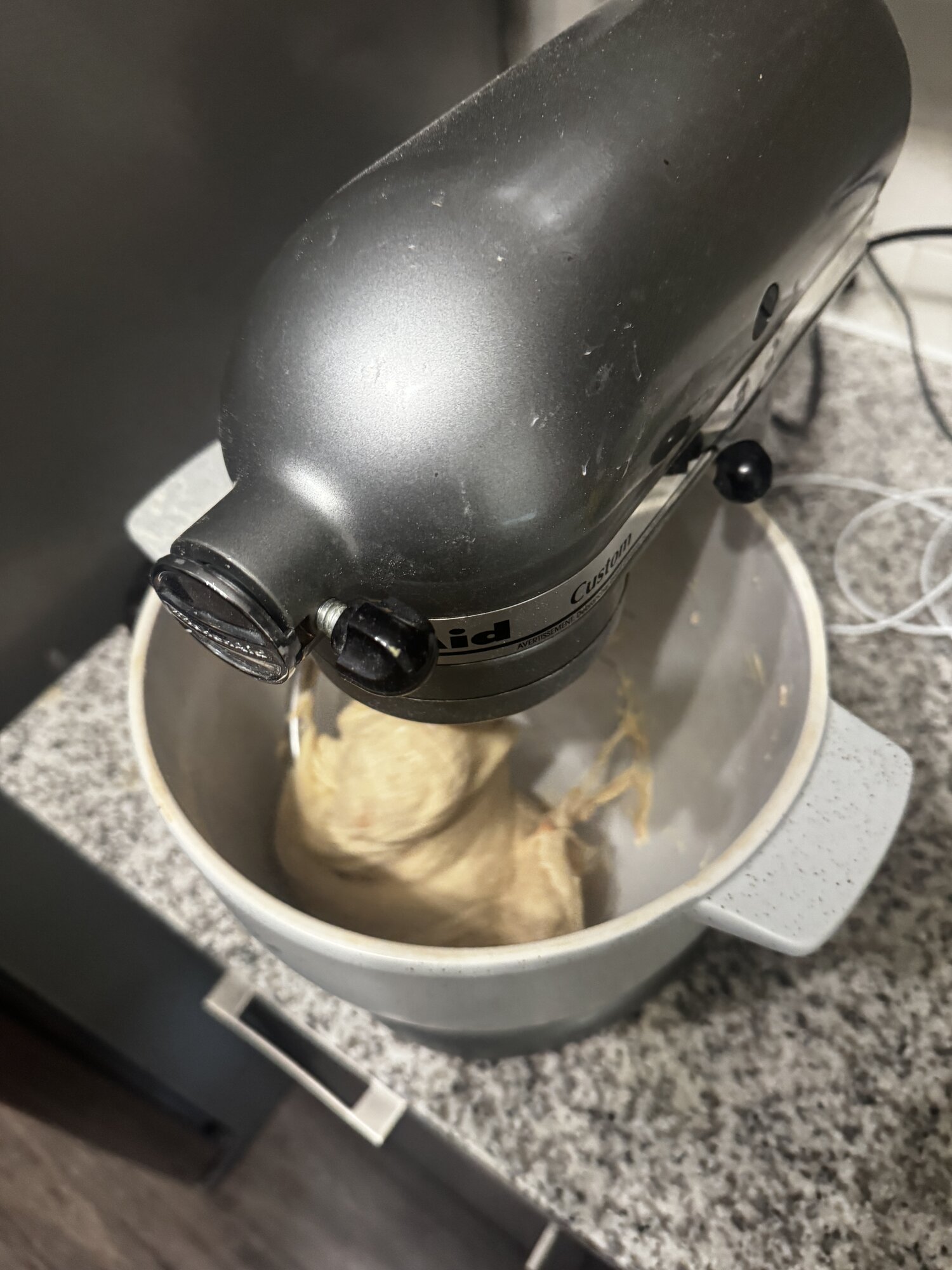
Meet my KitchenAid mixer, which officially answers to Dough Cloony.
The recipe wasn’t anything fancy—my 50/50 white and whole-wheat sourdough. It has become one of my favorite everyday loaves because it has more flavor than plain white bread without becoming too dense or overly rustic.
In case you’re wondering what “rustic” means, it is sometimes just a euphemism for “hard to chew.”
The autolyse went exactly as planned. The flour and water came together, then sat quietly while Bread Pitt finished waking up for his big day.
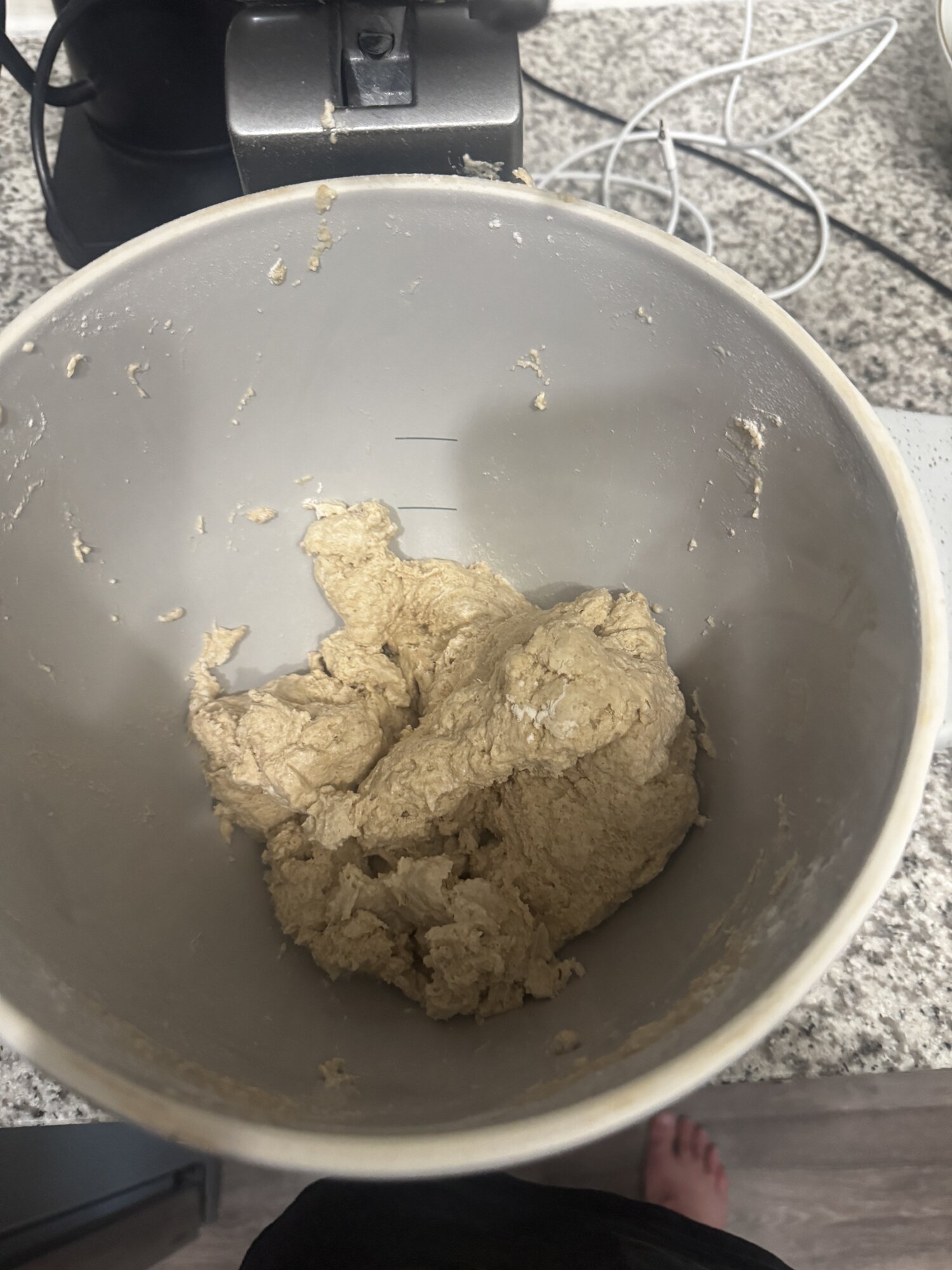
Once the starter and salt went in, Dough Cloony took over.
The dough came together fairly quickly, and after a few minutes of mixing, it looked ready for the next stage.
Trust the Process
Stretch the dough.
Fold it over.
Wait thirty minutes.
Repeat.
First fold
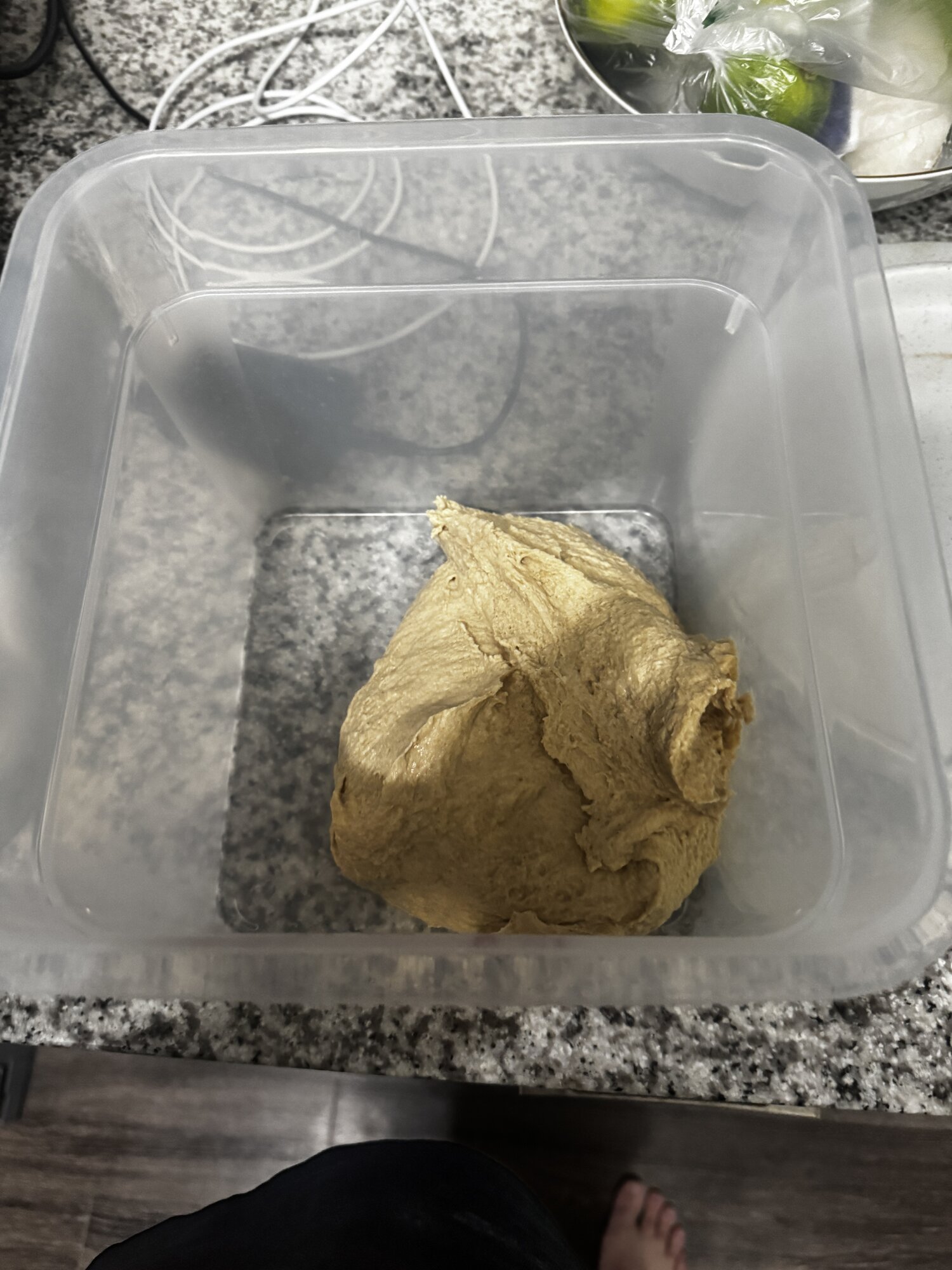
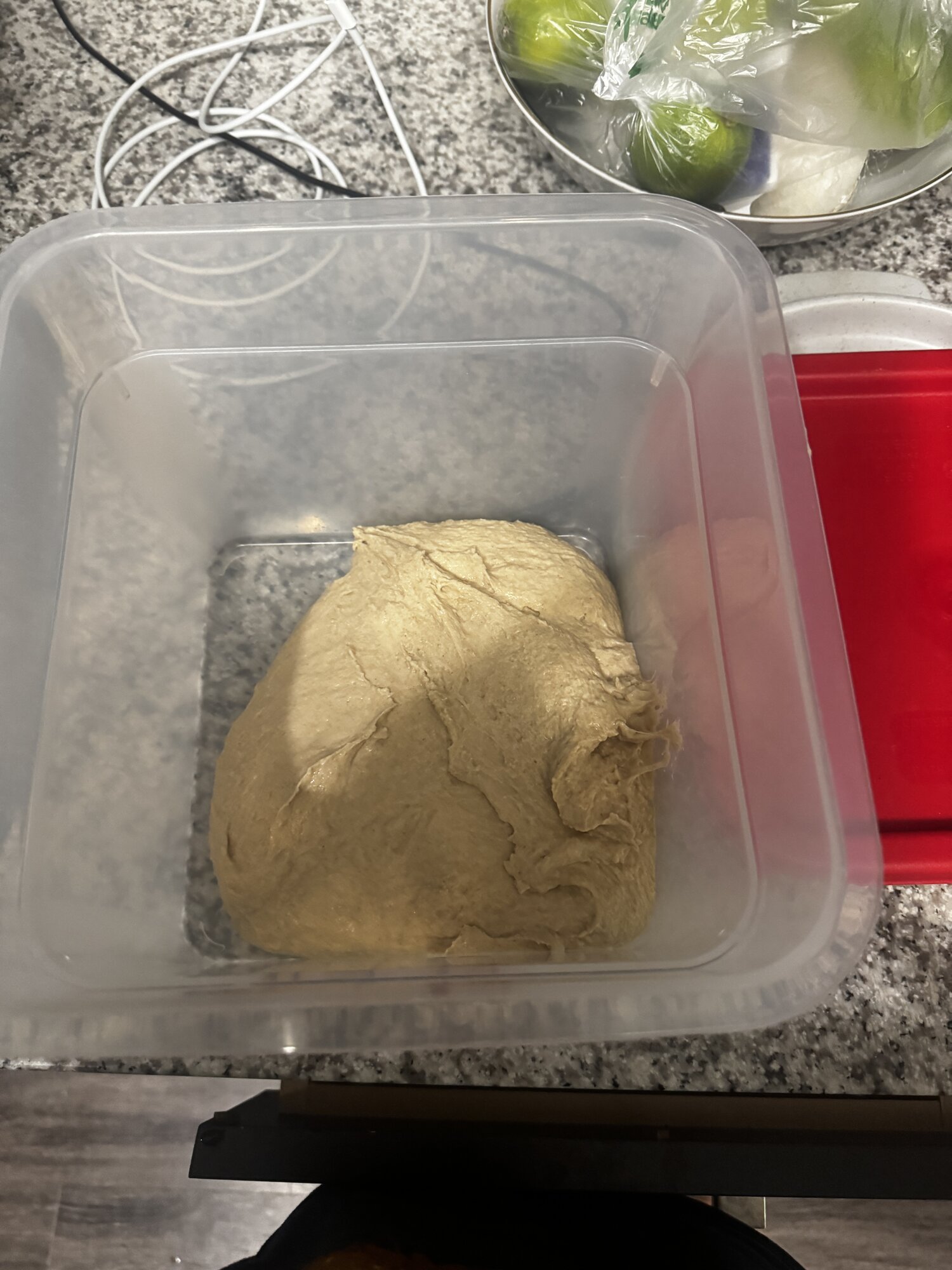
The first stretch wasn’t particularly encouraging.
The dough wanted to tear more than stretch, and I had strands breaking almost immediately.
That’s completely normal.
I hope.
By the end of the first set, though, the dough had already tightened up noticeably.
Second fold
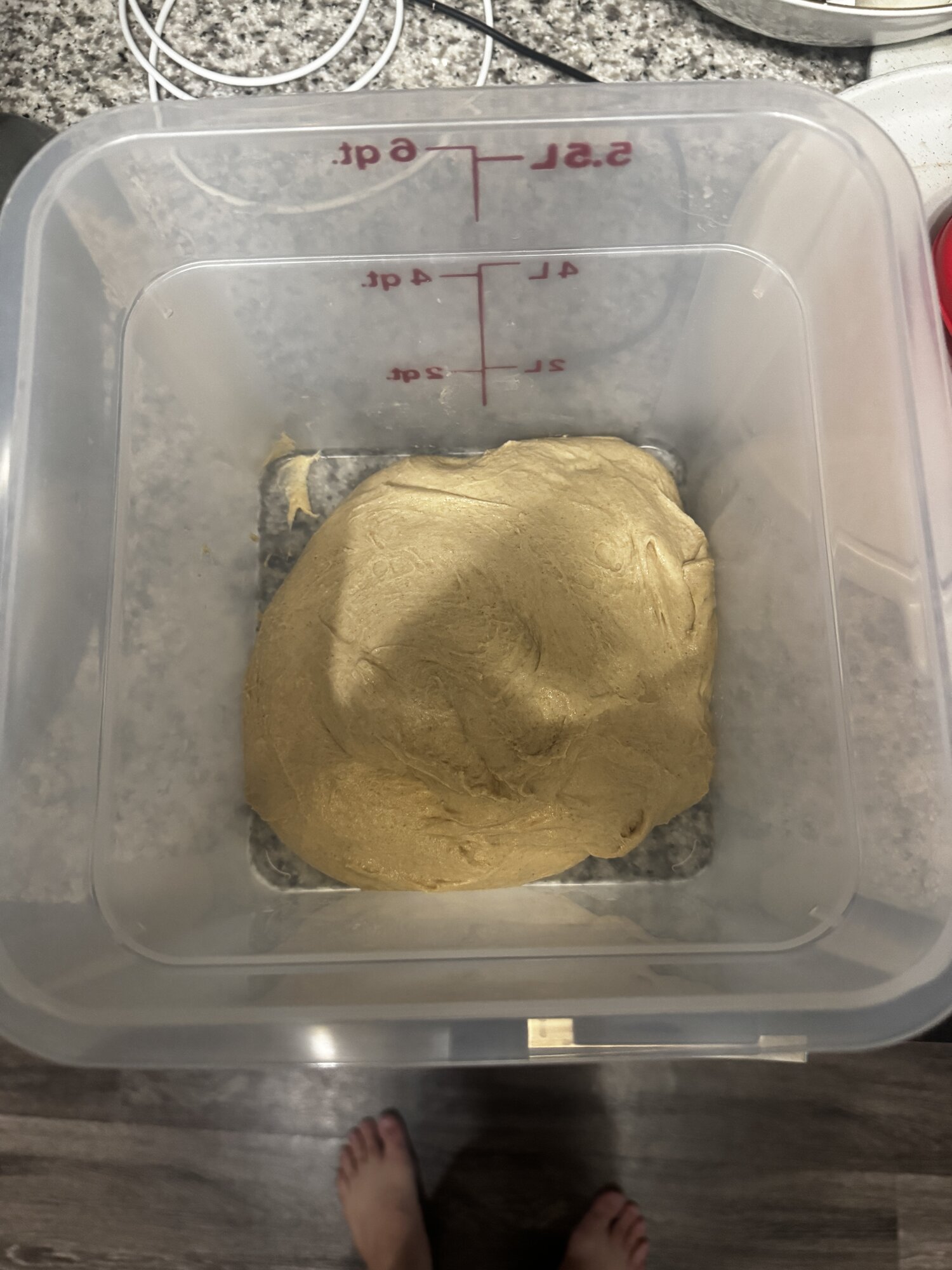
Thirty minutes later, things looked different.
The dough stretched farther before resisting and folded back over itself much more cleanly.
Instead of fighting me, it was starting to cooperate.
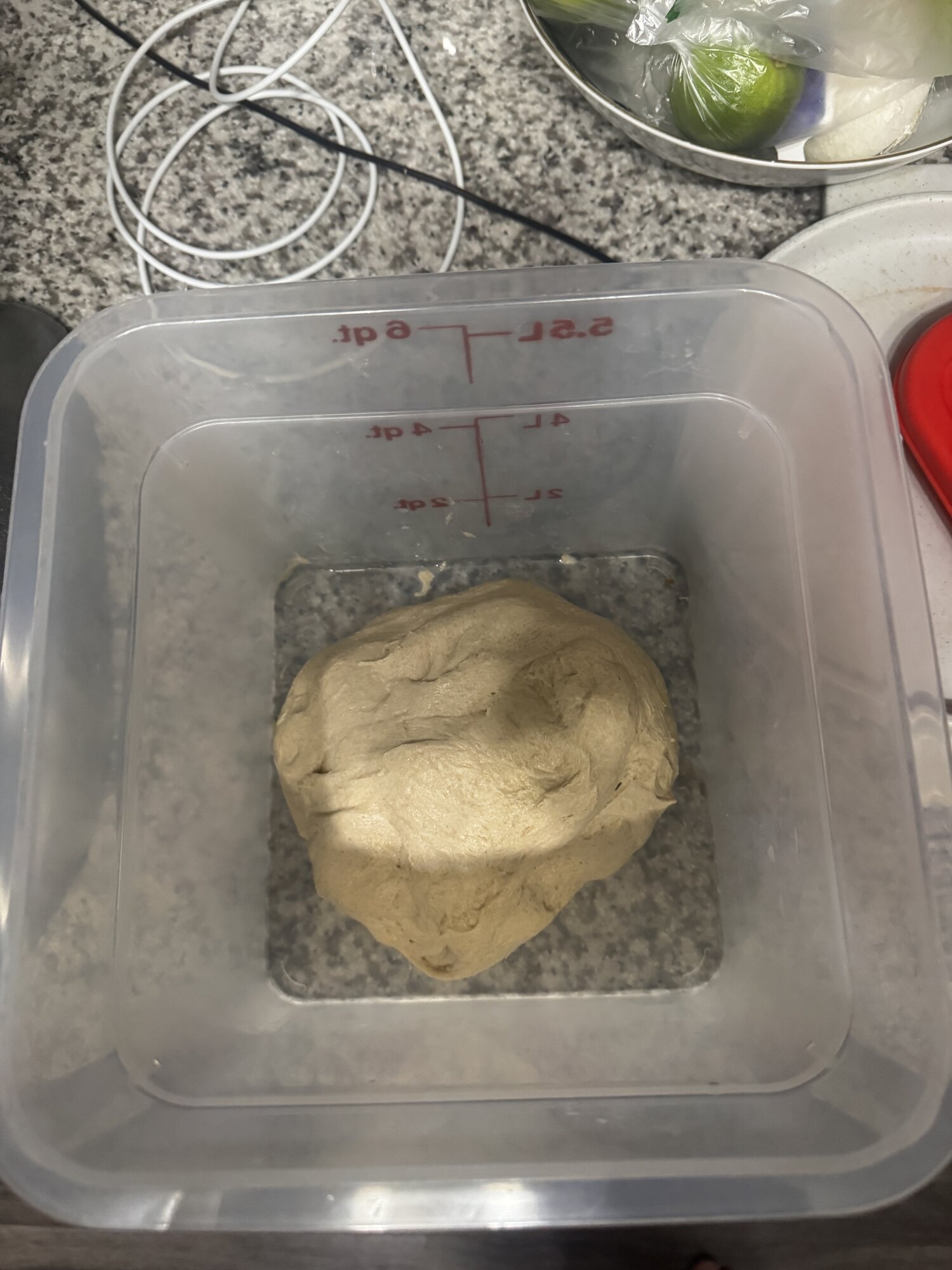
Third fold
By the third round, it finally felt like dough instead of a sticky science experiment.
It stretched nicely before tightening up again, and I could feel the gluten network starting to do its job.
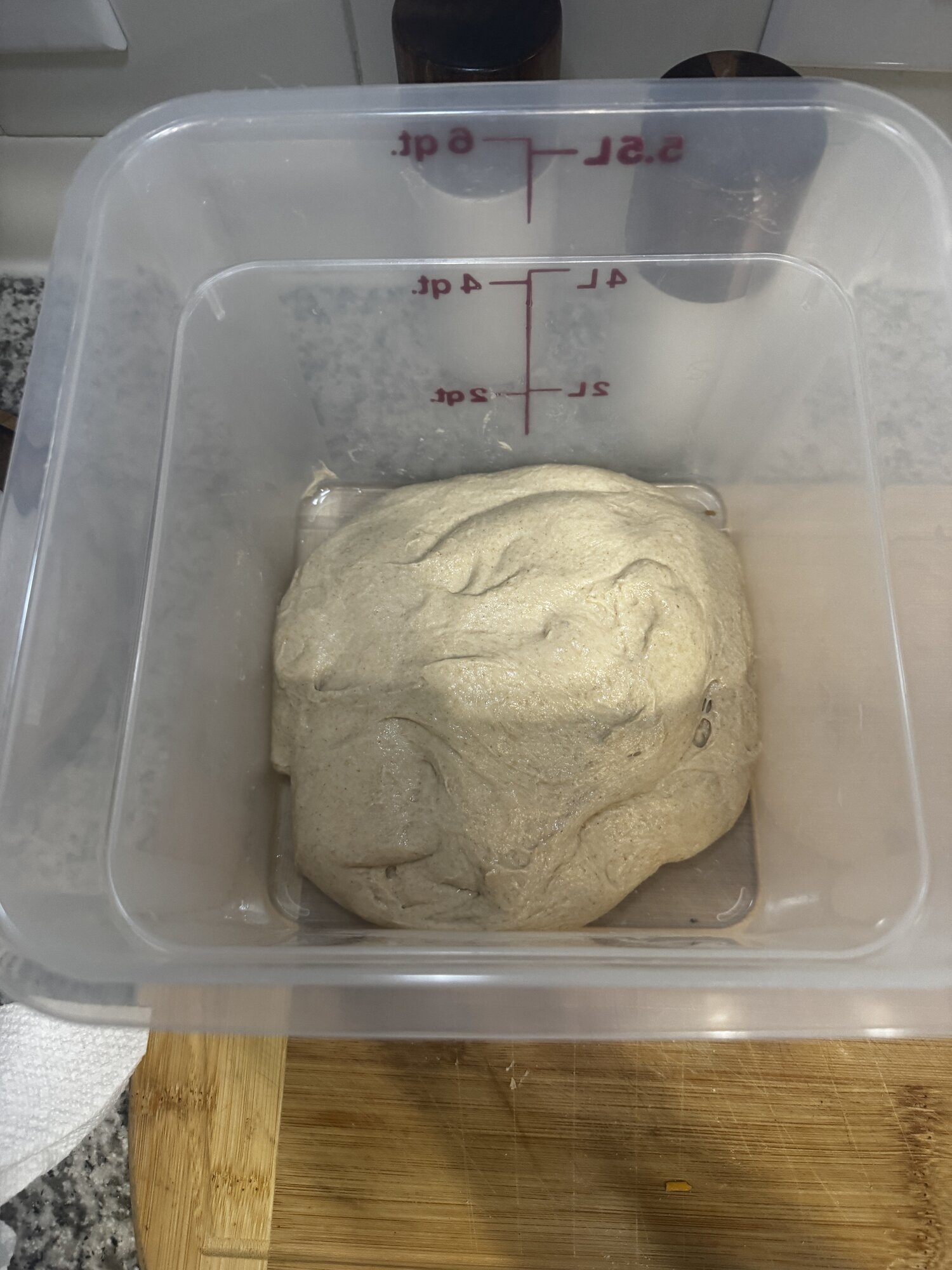
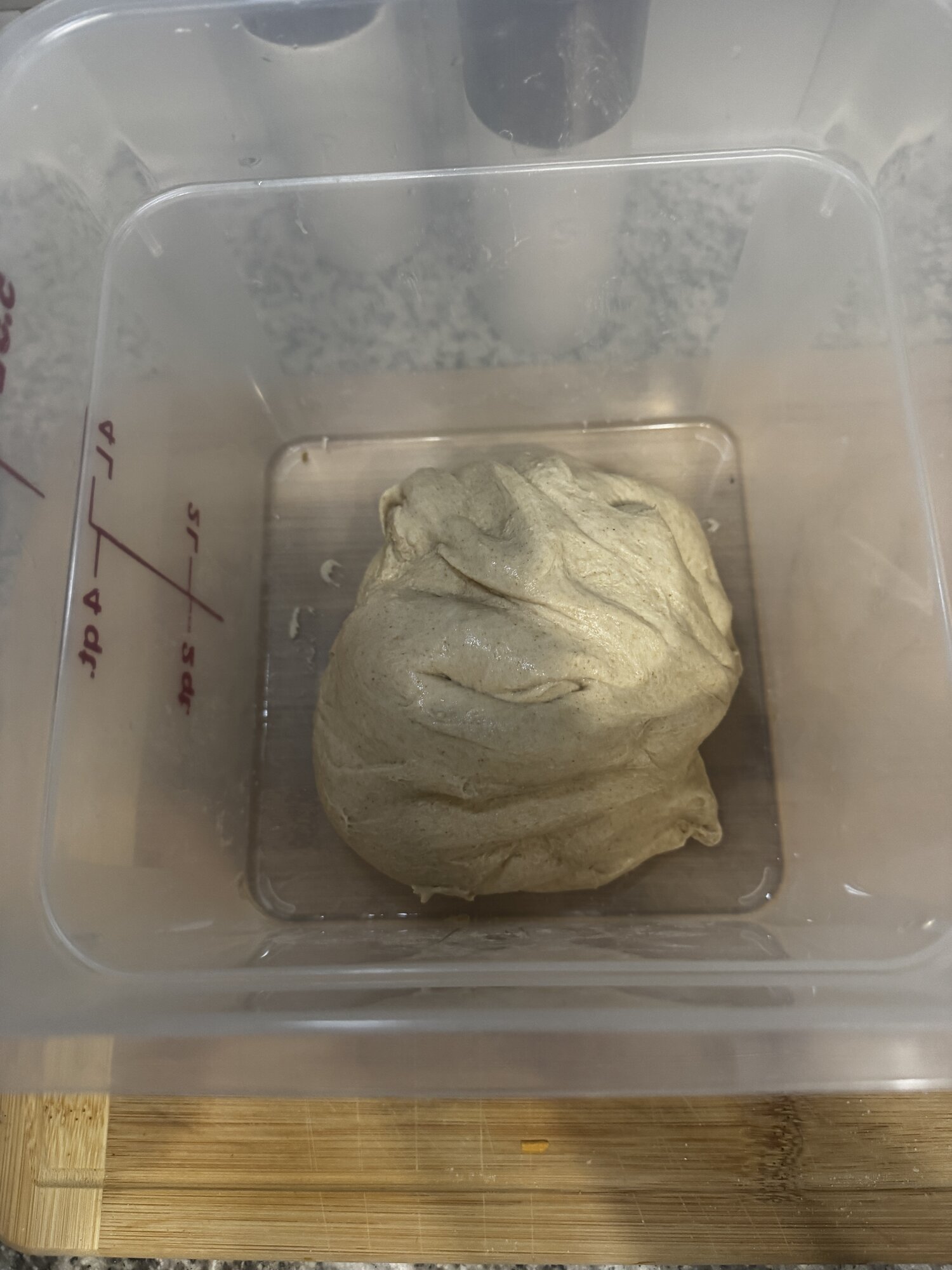
The Waiting Game
With the folds complete, it was time for bulk fermentation.
The dough settled into its container while Bread Pitt got to work.
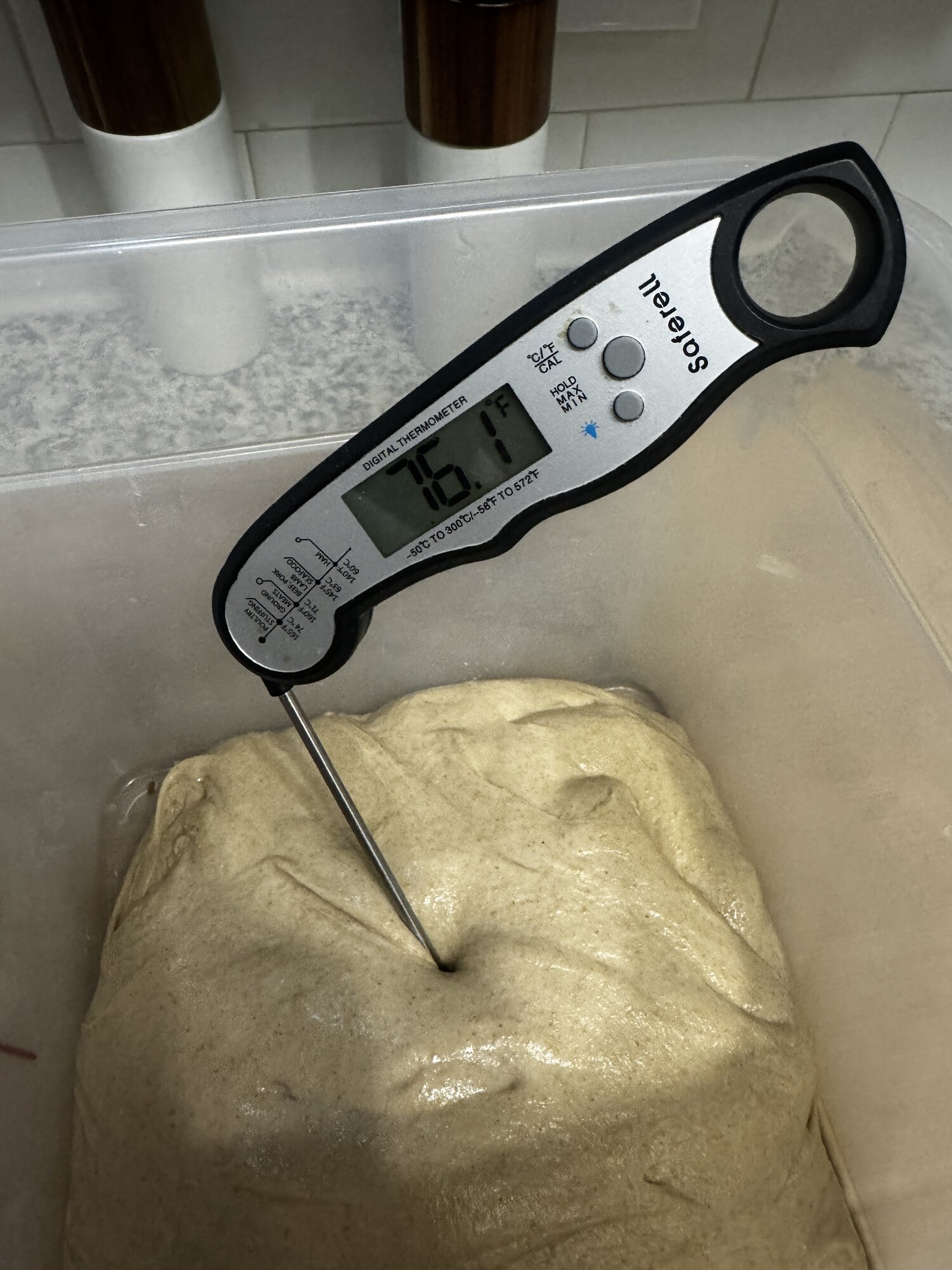
One thing I kept an eye on throughout the evening was the temperature. The dough stayed remarkably consistent at around 76°F, which was almost exactly where I wanted it.
That was one variable I didn’t have to worry about.
Waiting, on the other hand...
Waiting is hard. At least that’s what Tom Petty told me.
Every sourdough recipe says something like, “Bulk ferment for 10–12 hours.”
Real life doesn’t always cooperate with recipes.
I wasn’t planning to stay awake until four in the morning just to watch bread ferment. Instead, I kept checking the dough and watching for signs of growth rather than staring at the clock.
Real Life Beats Perfect Timing
Around 10:00 that night, I had a decision to make.
Stay awake?
Wake up in the middle of the night?
Or admit that I enjoy sleeping?
The refrigerator won.
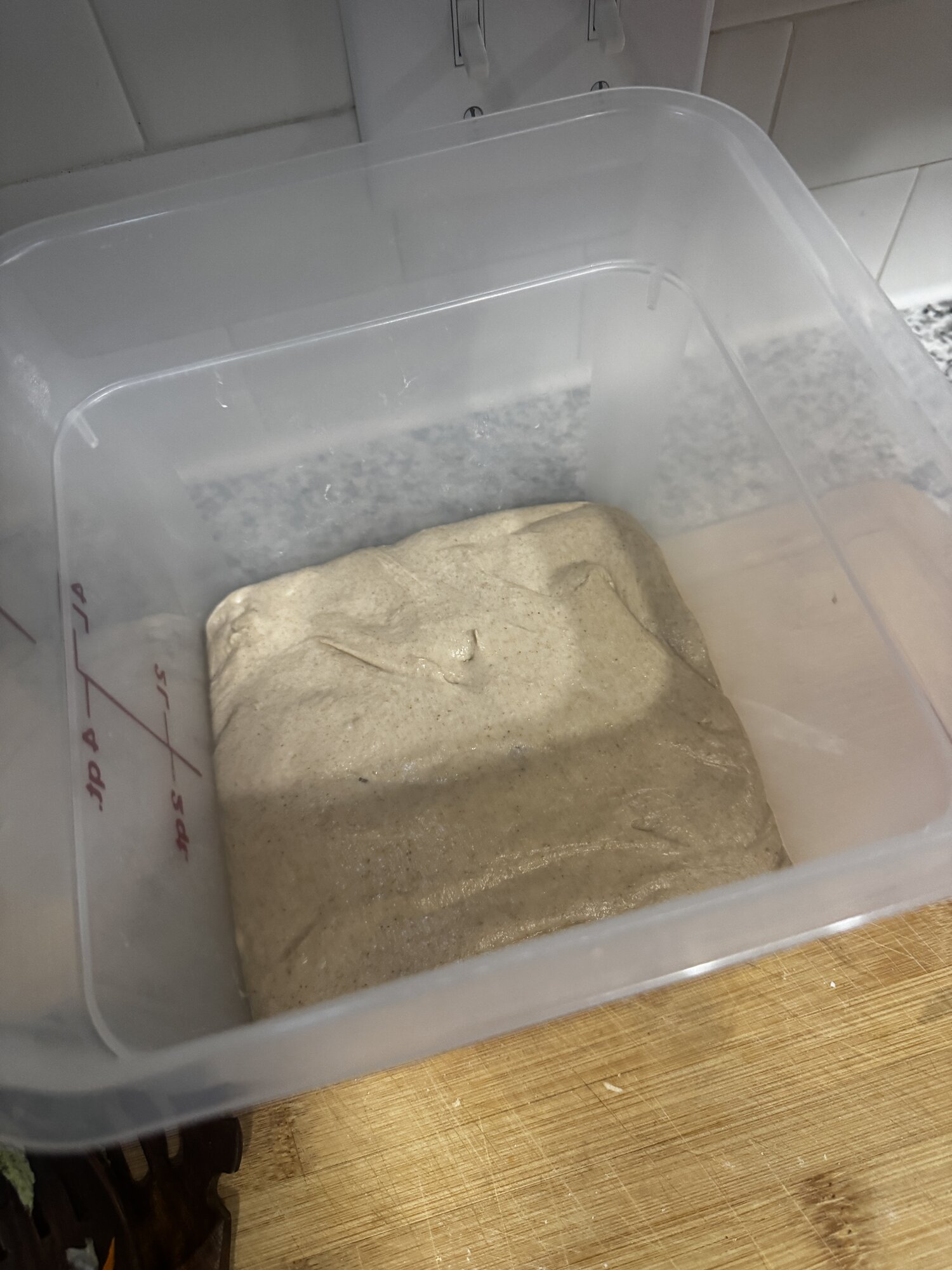
I tucked the dough into the fridge and picked the project back up around 4:00 the next morning. I hadn’t planned to start again at four, but that was when I woke up. Once I remembered there was dough in the refrigerator, I couldn’t go back to sleep.
People often think sourdough baking is incredibly rigid, but it is actually pretty forgiving once you understand what the dough is doing.
I’m not saying I understand it. I’m just getting better at guessing.
Sometimes your schedule dictates the bread instead of the other way around.
That’s okay.
Or at least that’s what I keep telling myself.
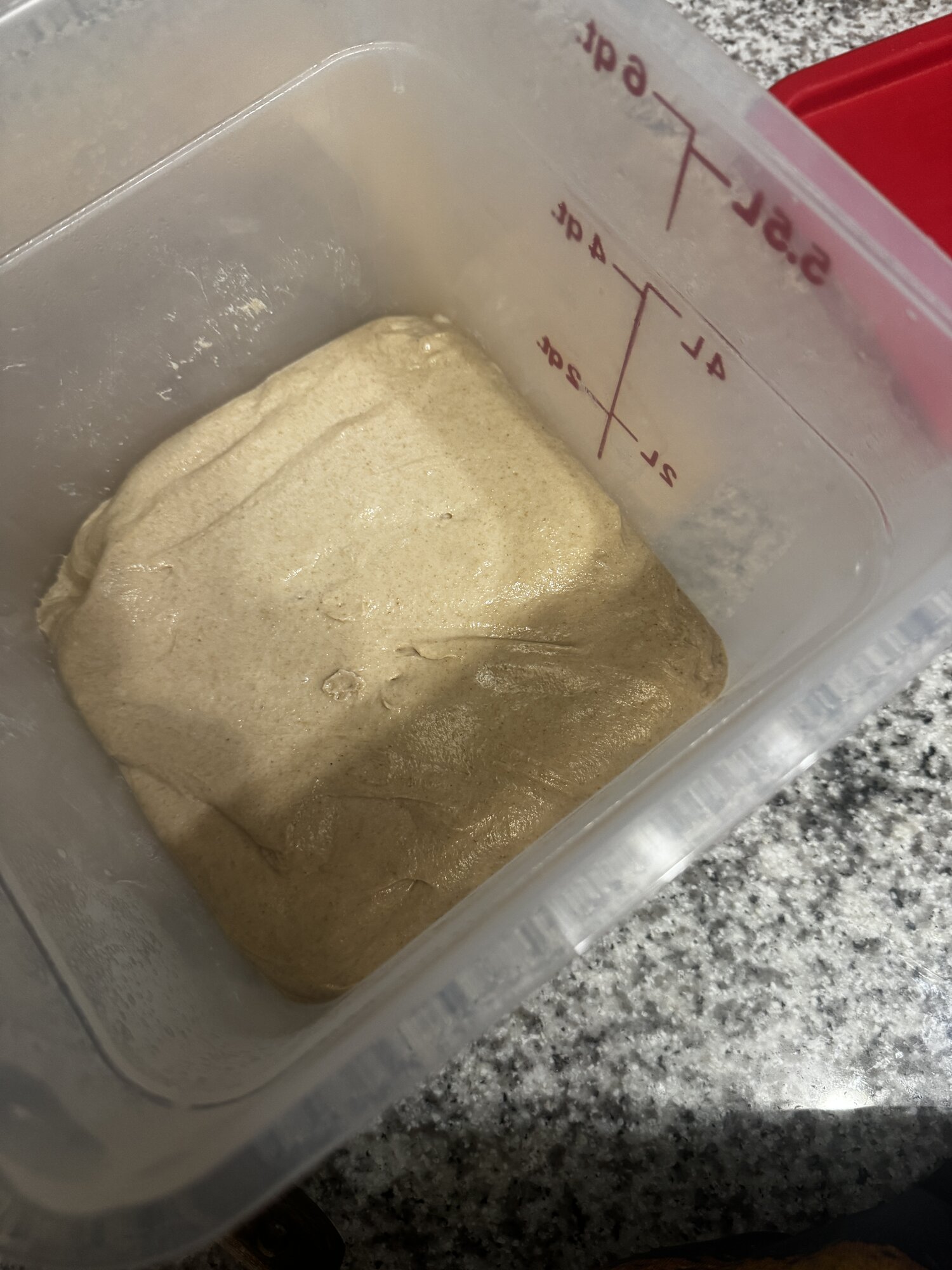
The Great Parchment Experiment
Then came an unexpected plot twist.
I reached for the parchment paper.
There wasn’t any.
Why would there be? I hadn’t bought any since moving into the apartment.
Normally, I bake in my KitchenAid bread bowl with parchment underneath the loaf.
Not today.
I lightly greased and floured the baking surface and hoped for the best.
Would that work?
Well... I guess we were finding out.
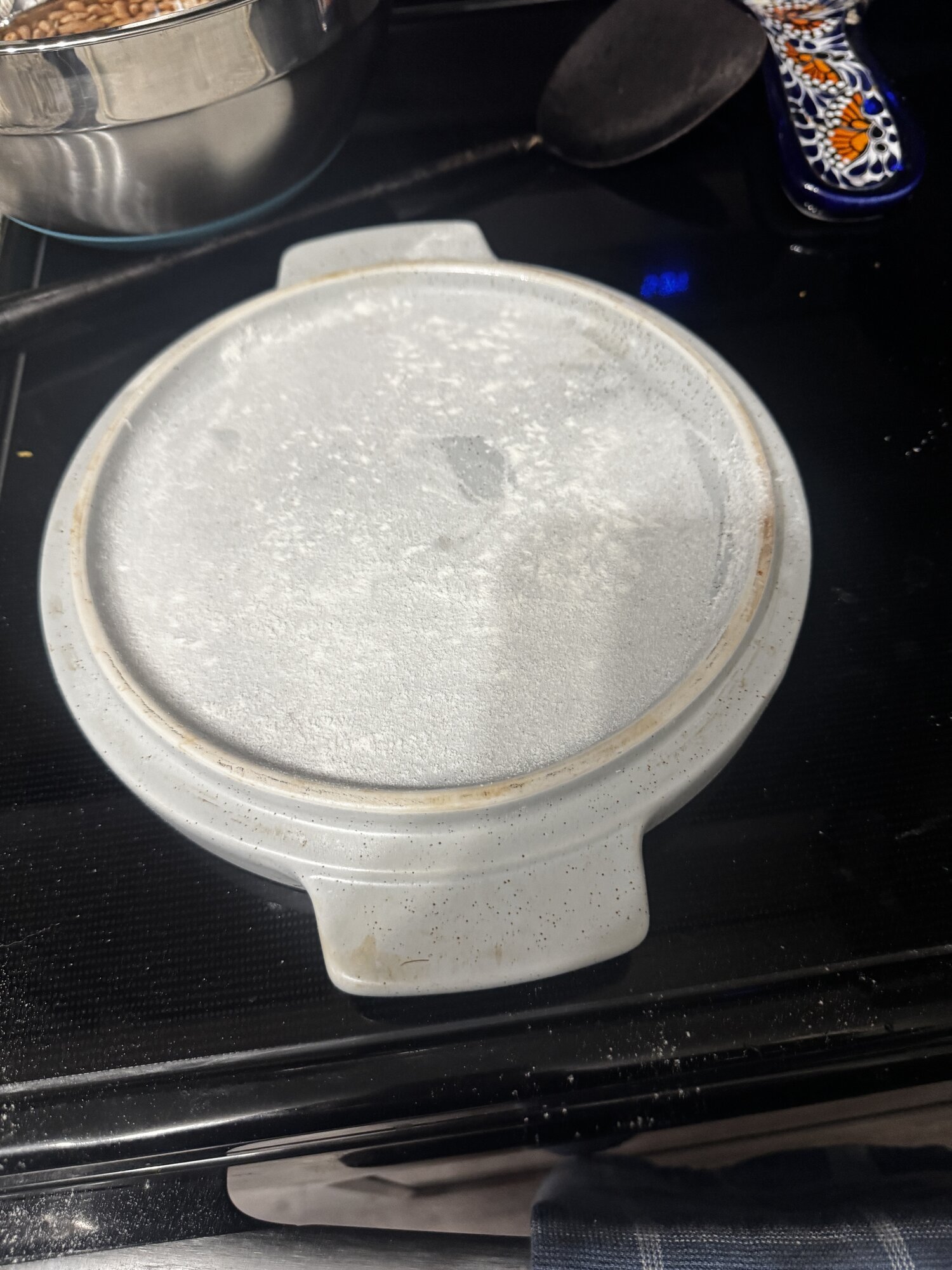
Oops...
Now you just put it in the oven and wait.
Right?
I forgot to score the loaf.
It was already sitting in the oven before my brain finally caught up.
Fortunately, it had only been in there for a minute or two.
Out it came.
Quick score.
Back into the oven.
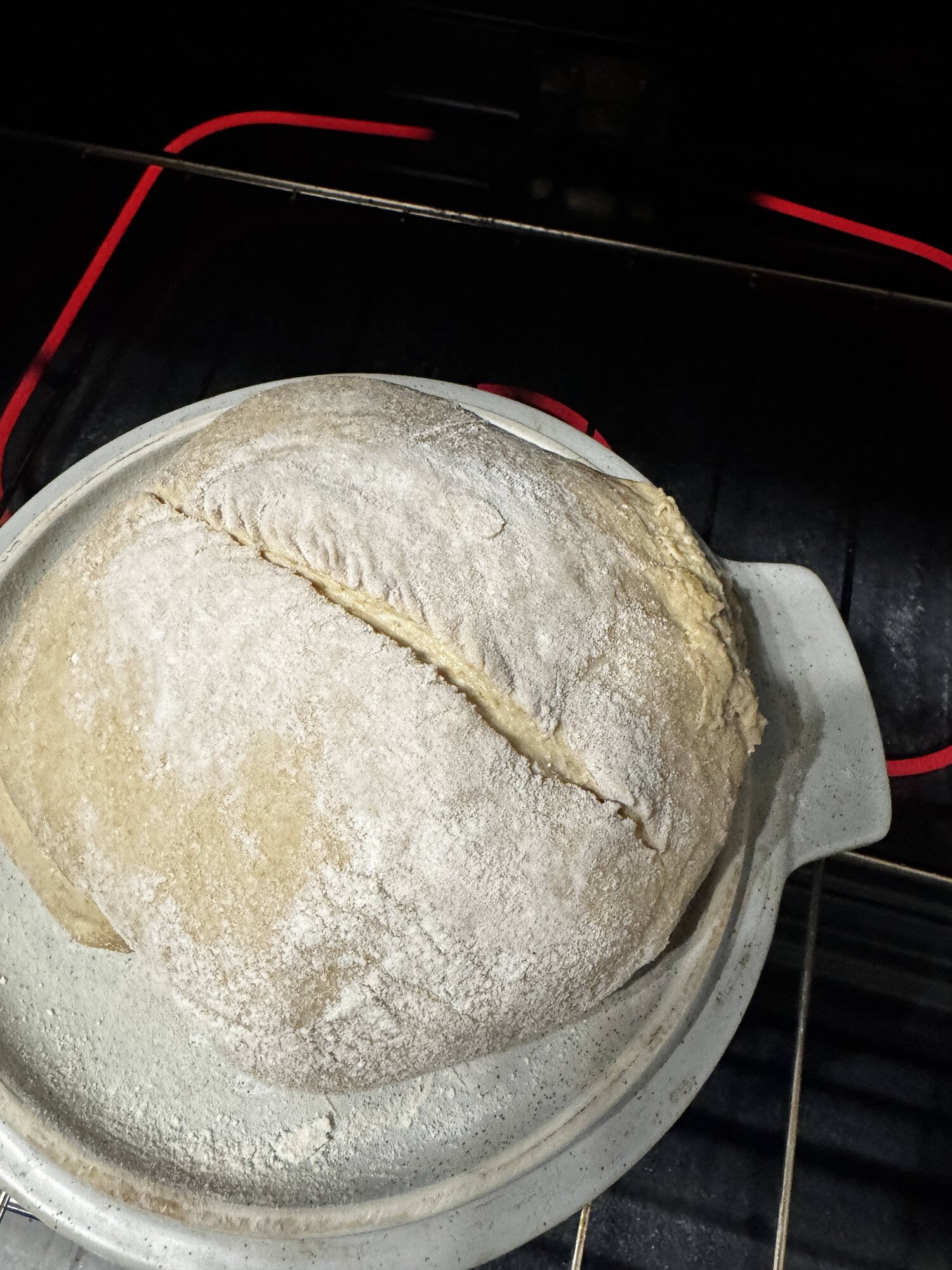
Not ideal, but certainly not the end of the world.
Or so I told myself.
Mistakes almost never ruin bread as dramatically as you think they will. Most of the time, they just teach you something for the next loaf.
Usually.
Opening Night
Twenty-five minutes under the lid...
Then the reveal.
This is the moment that is either exciting or disappointing.
You spend hours looking at a lump of dough, and suddenly there is an actual loaf sitting in front of you.
It might still be a lump.
Or it might actually look like bread.
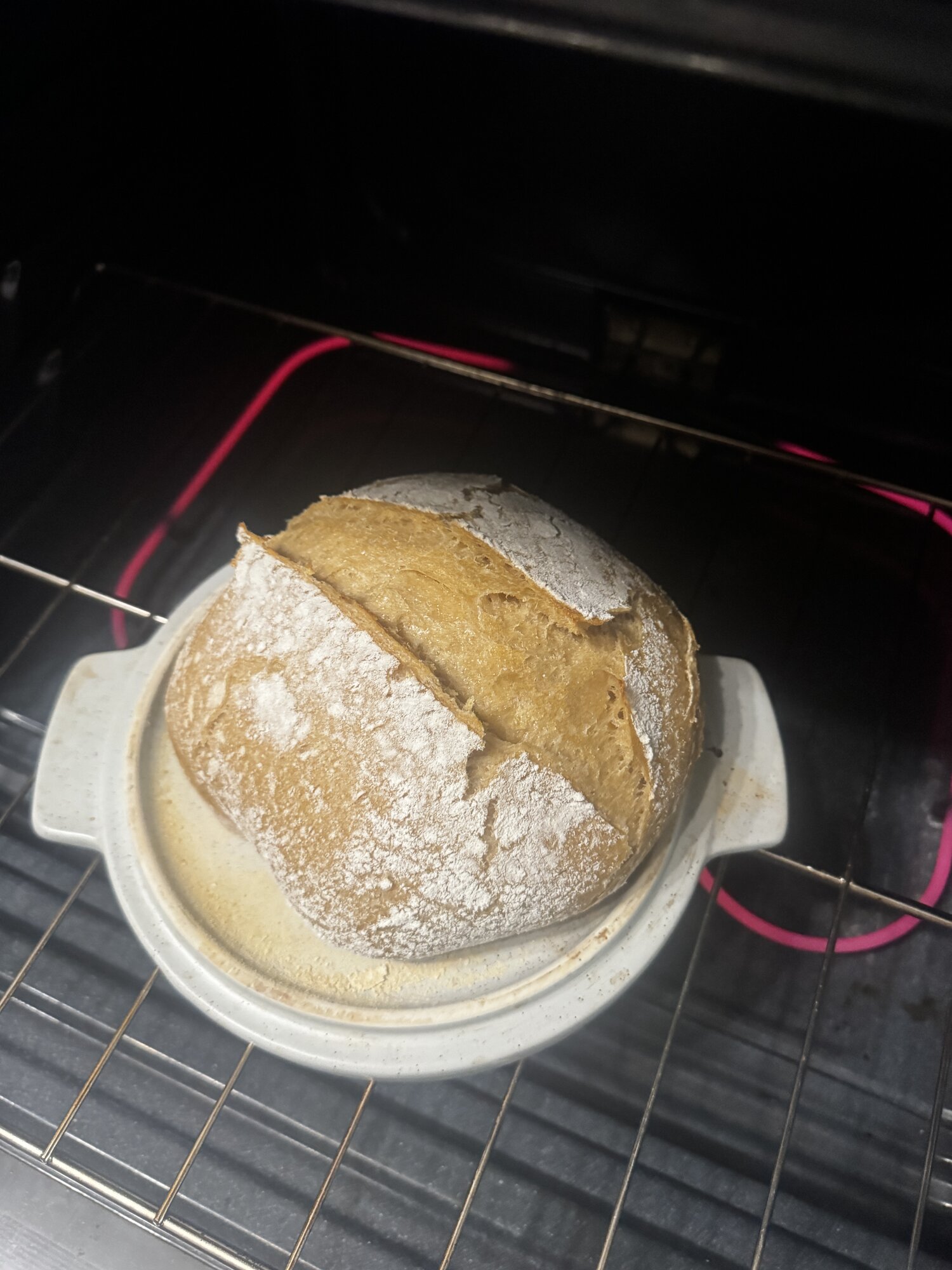
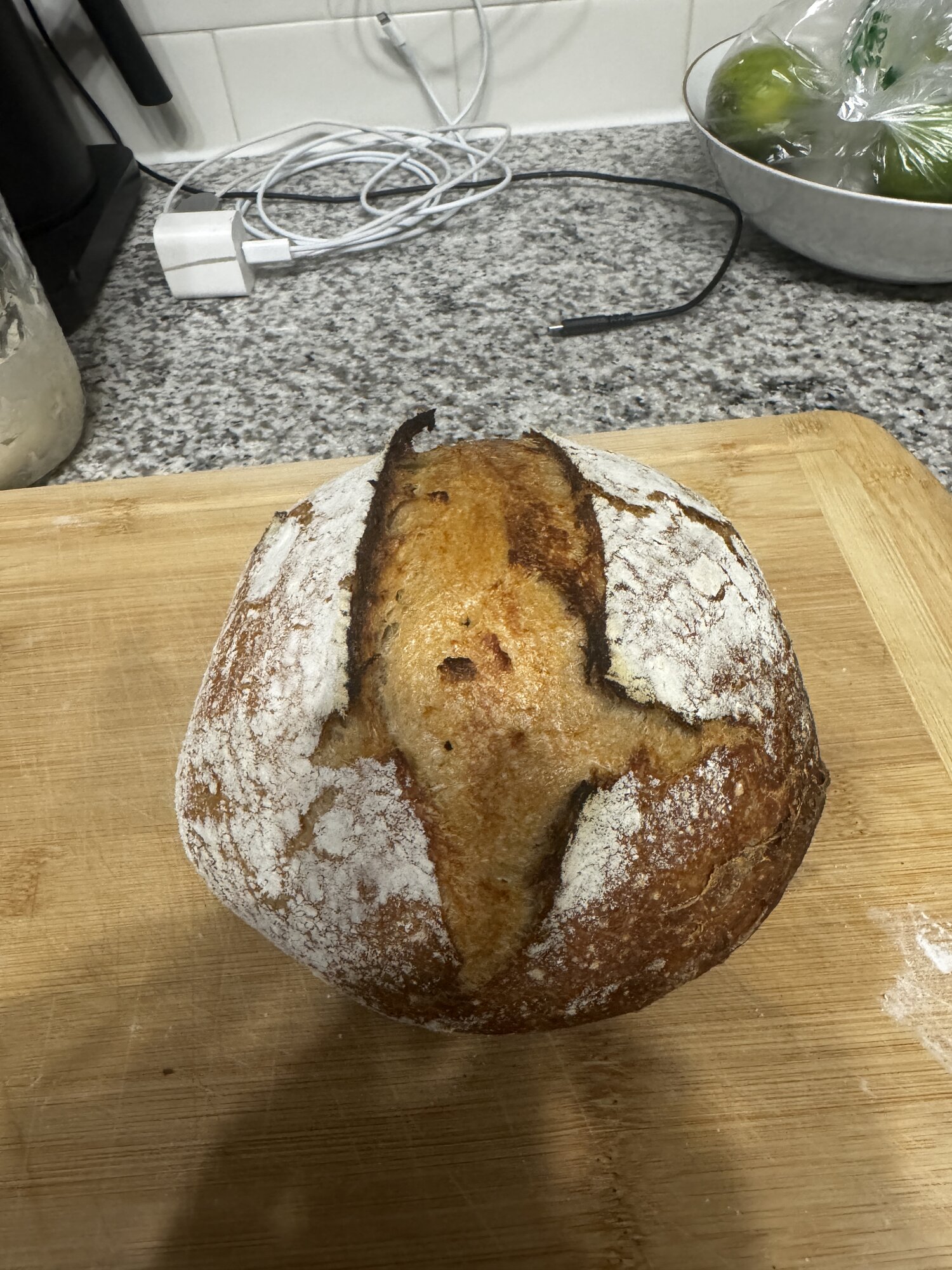
Even before the final part of the bake, I could tell this one had good oven spring.
After another twenty minutes uncovered, the internal temperature reached 209°F.
Exactly where I wanted it.
I was actually aiming for 208°F, but let’s allow a little revisionist history.
The best surprise?
The loaf lifted cleanly out of the bread bowl without any parchment at all.
Apparently, I may not have needed it all along.
The Crumb Shot
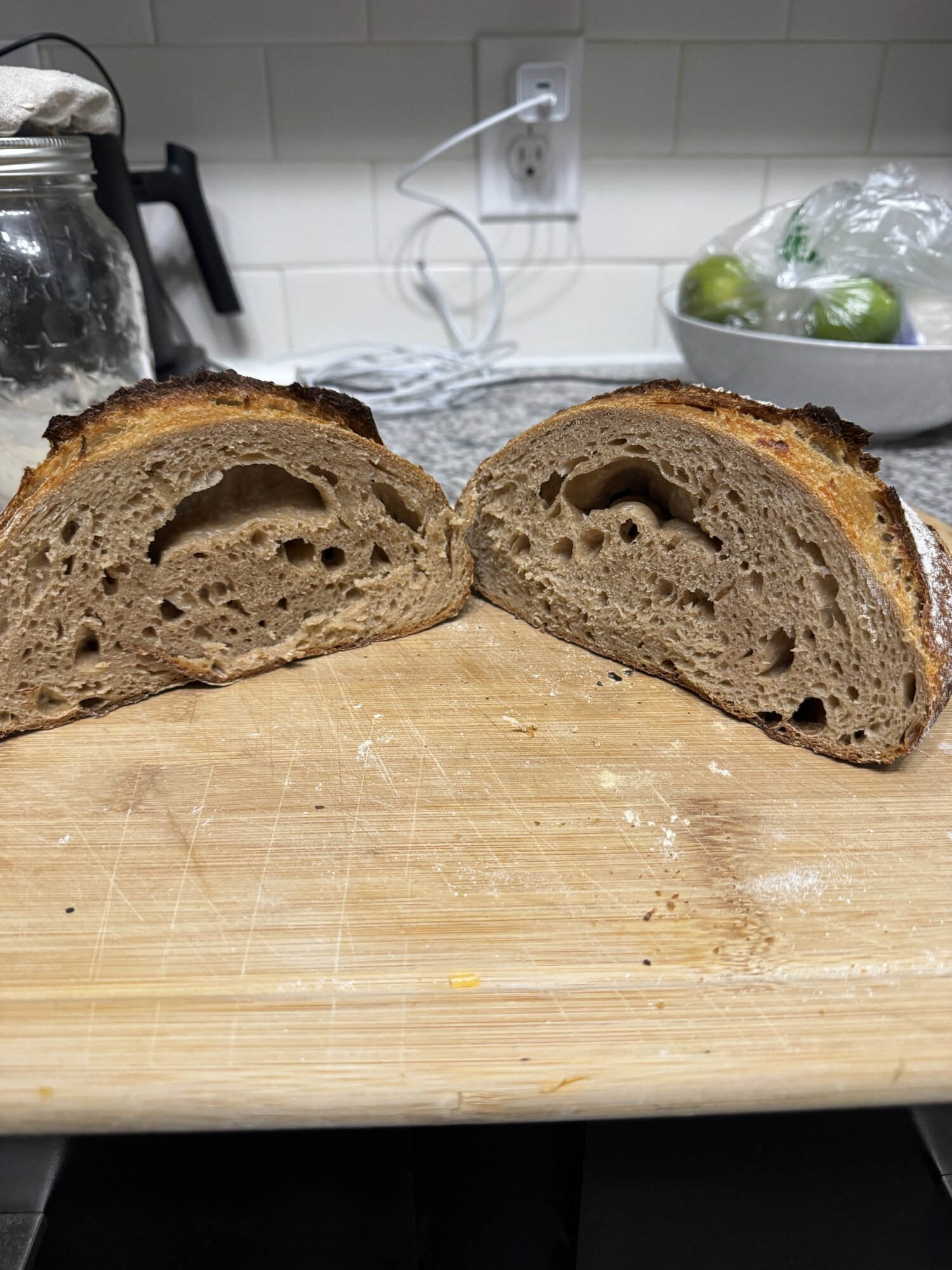
Every sourdough baker waits for the crumb shot.
It is the report card.
The loaf had a great crust, good color, and plenty of oven spring.
Inside, there were a couple of larger air pockets just beneath the score. That usually means the loaf could have proofed a little longer before baking.
Not a failure.
Just feedback.
The rest of the crumb was exactly what I wanted: fully baked, soft, flavorful, and perfect for sandwiches or toast.
That is one of the things I enjoy most about sourdough. Every loaf teaches you something.
Sometimes the lesson is huge.
Sometimes it is just another twenty minutes of proofing.
Either way, the next loaf gets a little better.
Probably.
Hopefully.
Final Thoughts
Bread Pitt’s first loaf probably won’t win any Hollywood awards, but I give it eight out of ten thumbs up.
The crumb could have been a little better, but the bread was delicious.
More importantly, Bread Pitt is back.
After losing my original starter during the move to Texas, it would have been easy to buy another one or let the hobby quietly fade away.
I rarely do things the easy way.
Honestly, I think that is what this website is really about.
Not showing perfect bread.
Showing real bread.
The good loaves, the bad loaves, the mistakes, the victories, and the process of learning how to adapt when things don’t go according to plan.
Because that is how you actually get better.
And besides...
Even the loaves that don’t turn out exactly the way I planned are still usually pretty good with butter.