BAKE002 · August 6–August 7, 2026
The Sandwich Bread Experiment
A softer sourdough loaf, a longer fermentation, and a reminder that every bake teaches something.
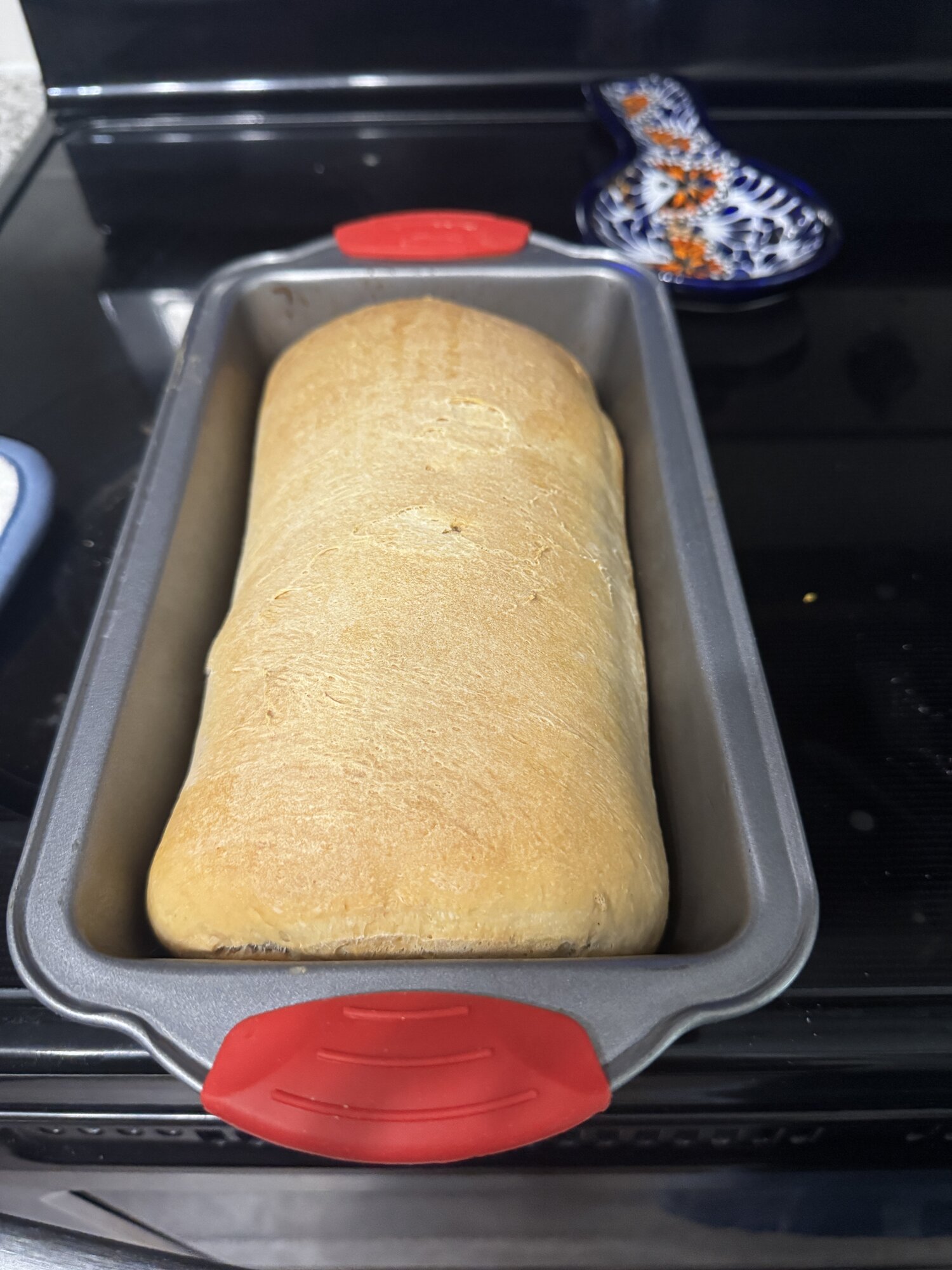
After Bake001 proved that Bread Pitt 2.0 could make a respectable loaf of sourdough, it was time to try something a little more practical.
A sandwich loaf.
The recipe for this bake is available here: Sourdough Sandwich Bread.
The goal was pretty simple: make a loaf that works for sandwiches, makes good toast, and still has that sourdough flavor. Something that could become an actual part of the kitchen routine instead of just sitting there looking pretty while I take pictures of it.
Getting Bread Pitt Ready
The night before the bake, Bread Pitt got his usual feeding.
- 40g starter
- 80g water
- 40g bread flour
- 40g whole wheat flour
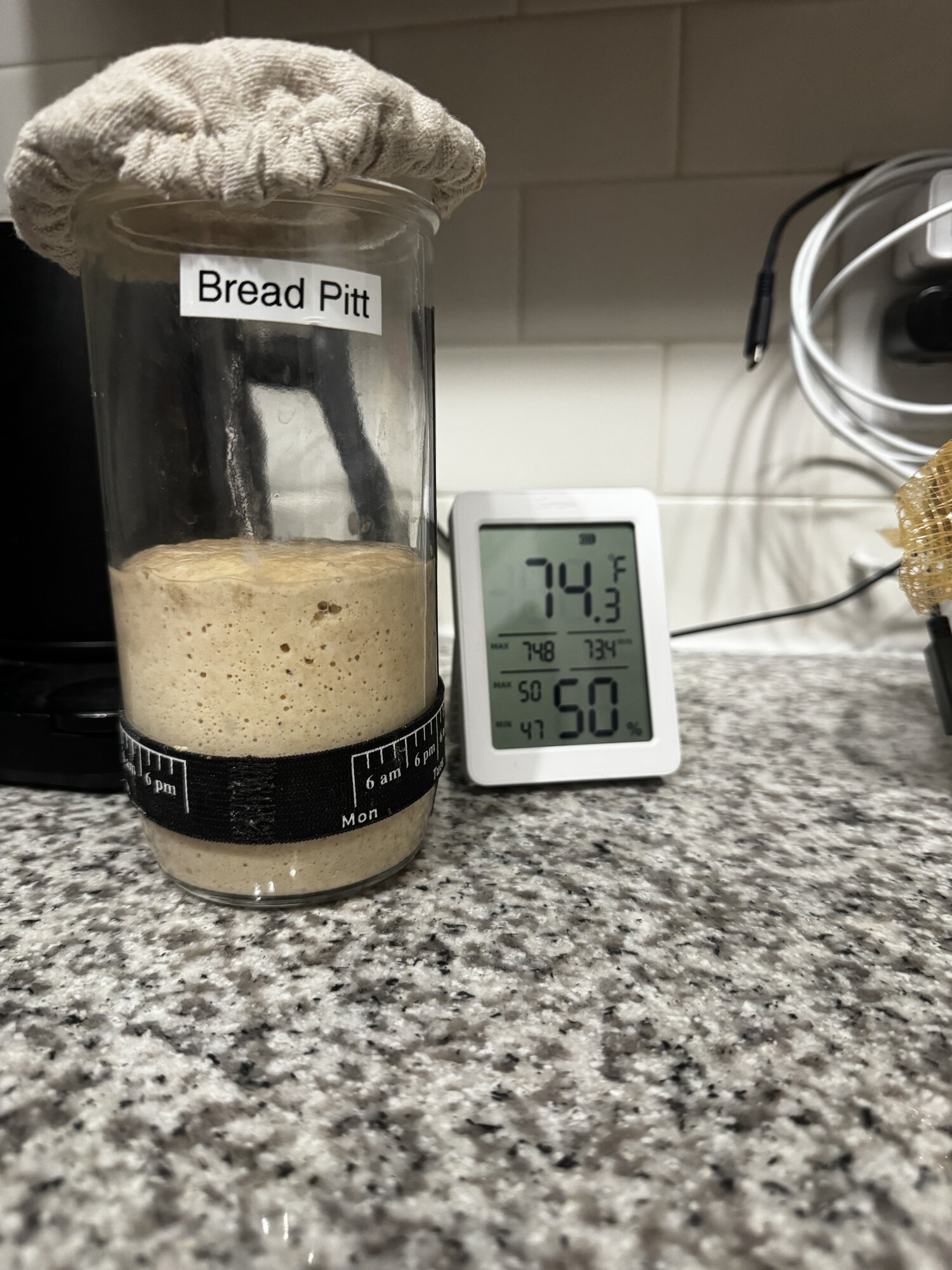
About 8 hours later, he was ready. He had more than doubled, had plenty of bubbles, and smelled like fresh bread with just enough sourdough attitude.
Bread Pitt was awake.
Dough Cloony was waiting.
Time to make some bread.
Mixing the Dough
This recipe brought a new technique into the experiment: scalded milk.
The recipe calls for heating the milk to 180°F before using it. Scalding the milk is supposed to help improve the texture of enriched breads. The interesting part for this bake was managing the temperature afterward.
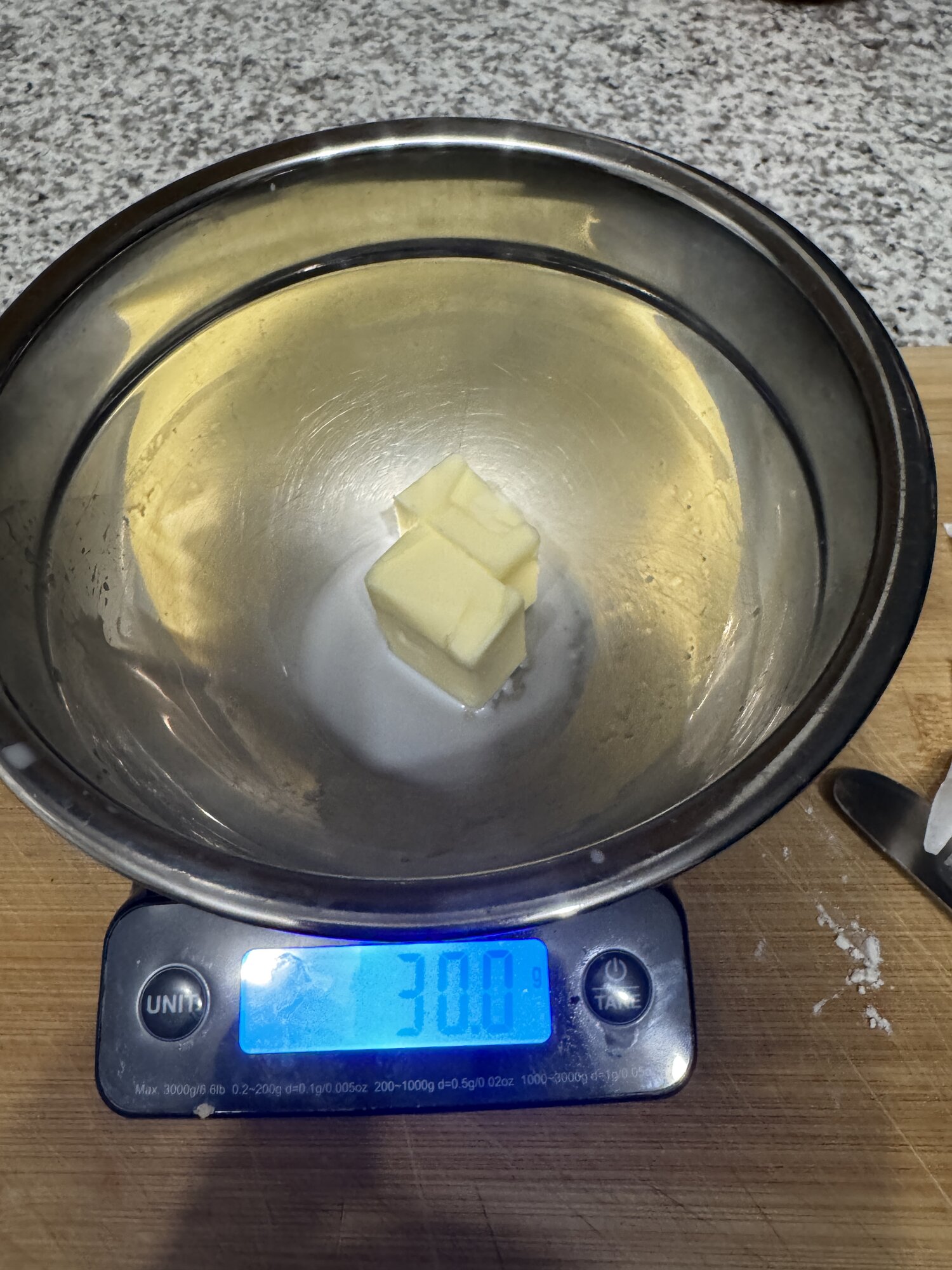
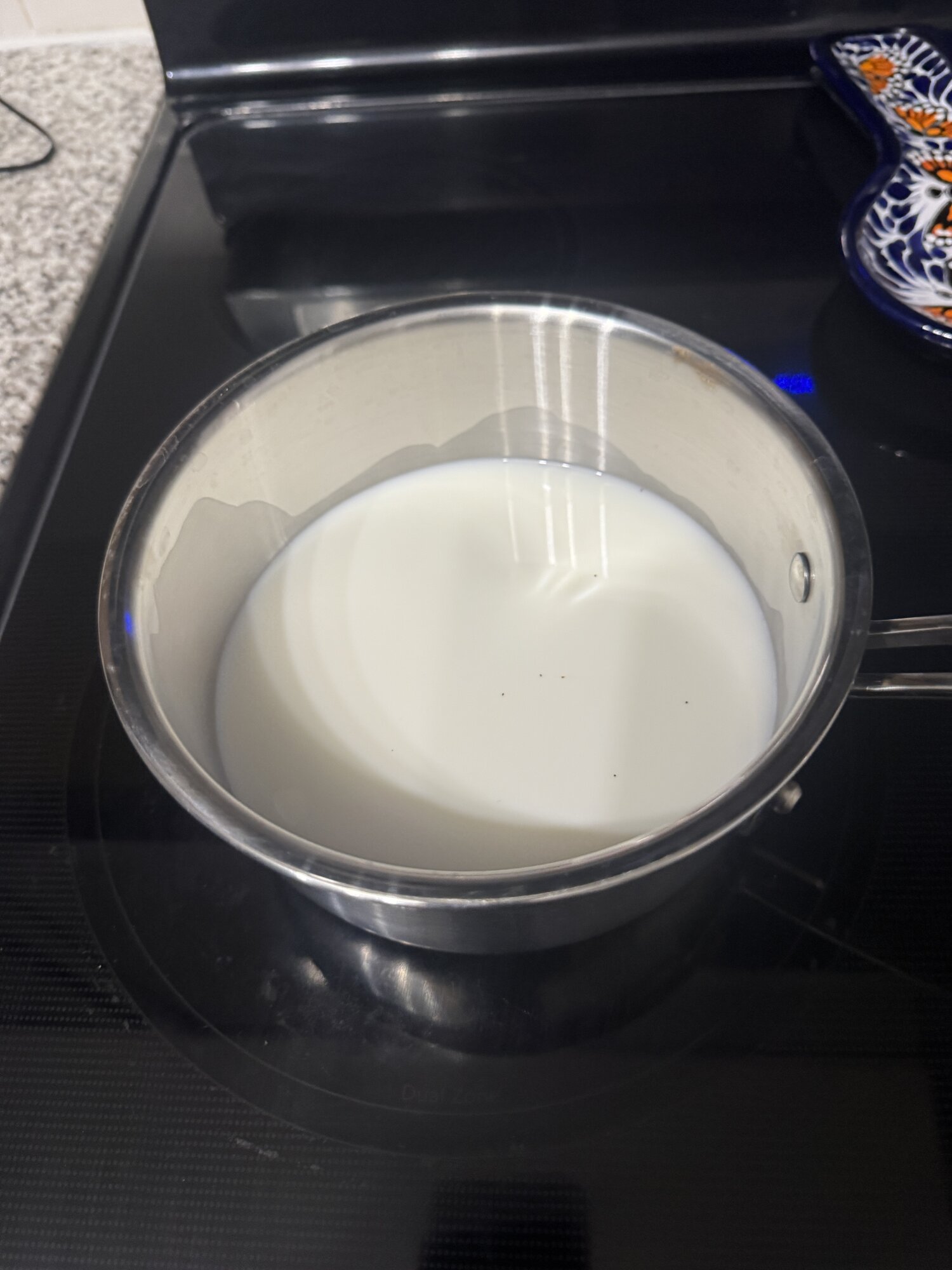
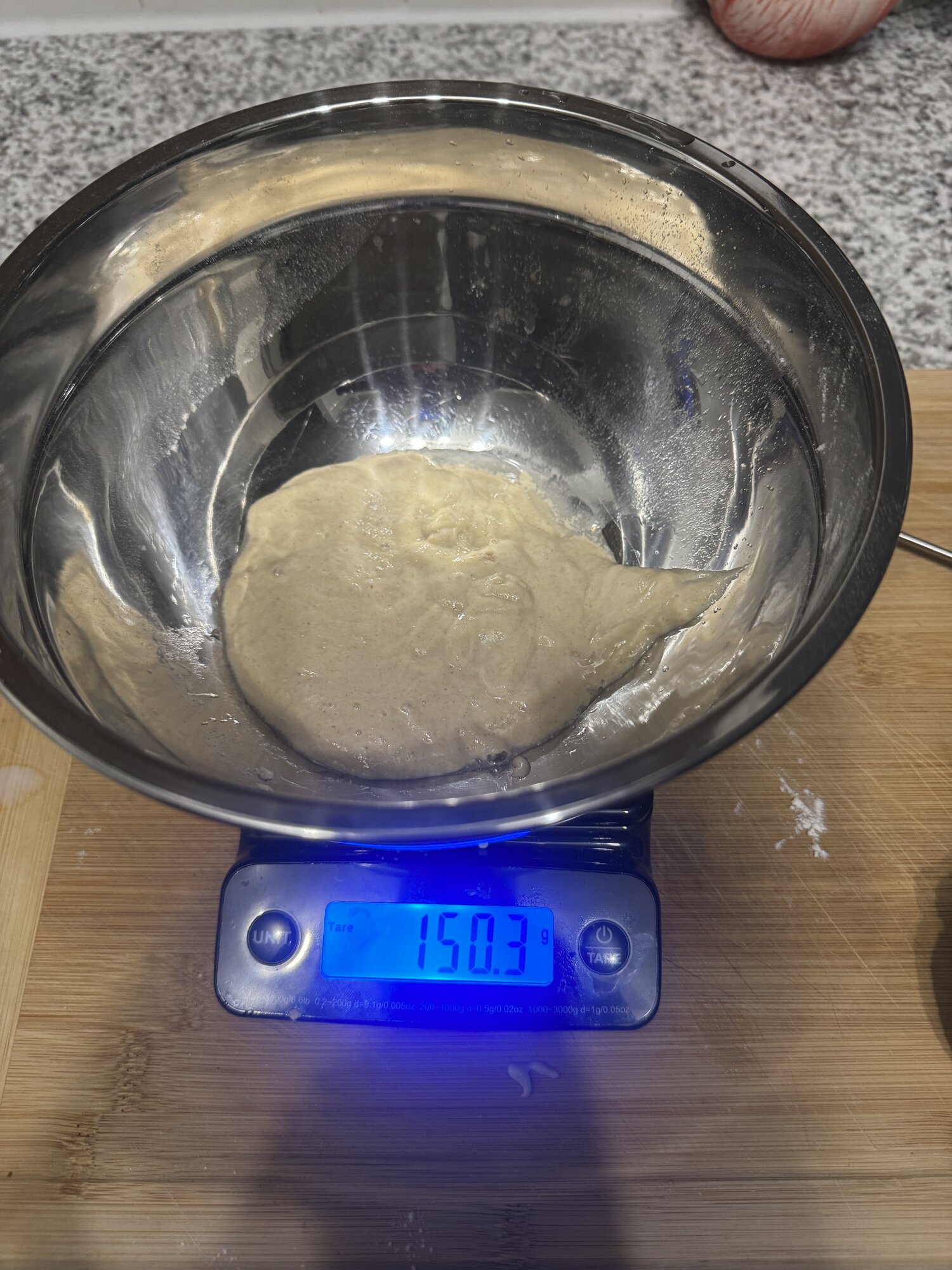
After heating the milk, I cooled it down while mixing in the butter and honey before adding it to the dough. That helped, but the dough still finished mixing at 85°F.
That was warmer than I expected, so I knew fermentation was probably going to get a little head start.
The recipe called for 2–3 minutes of mixing. After that first mix, the dough had come together but still looked pretty rough. A short rest helped, then another couple of minutes in Dough Cloony brought everything together.
Next time, I would cool the milk mixture a little longer before mixing. The scalding step stays; the challenge is getting the benefits without starting fermentation warmer than intended.
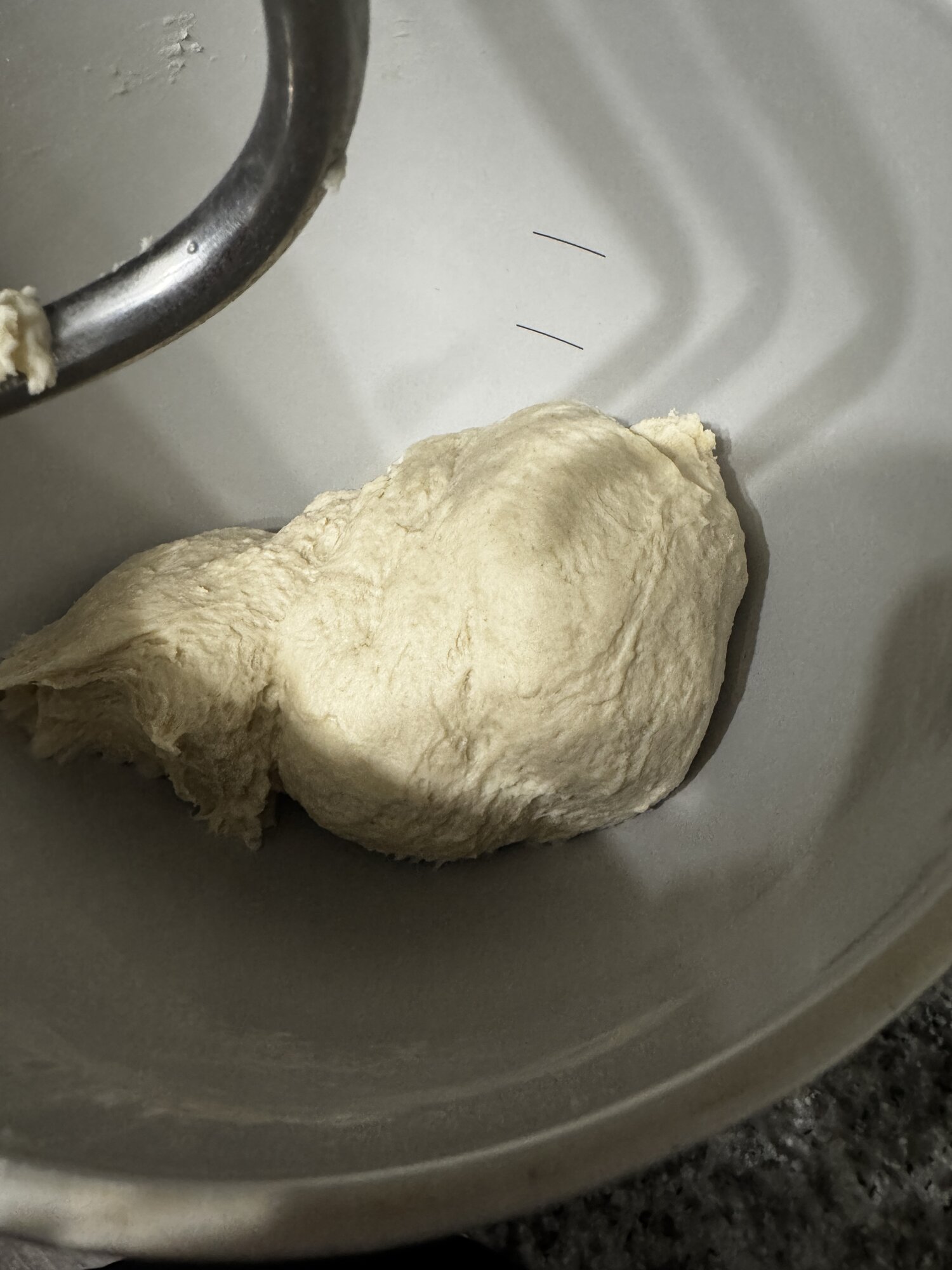
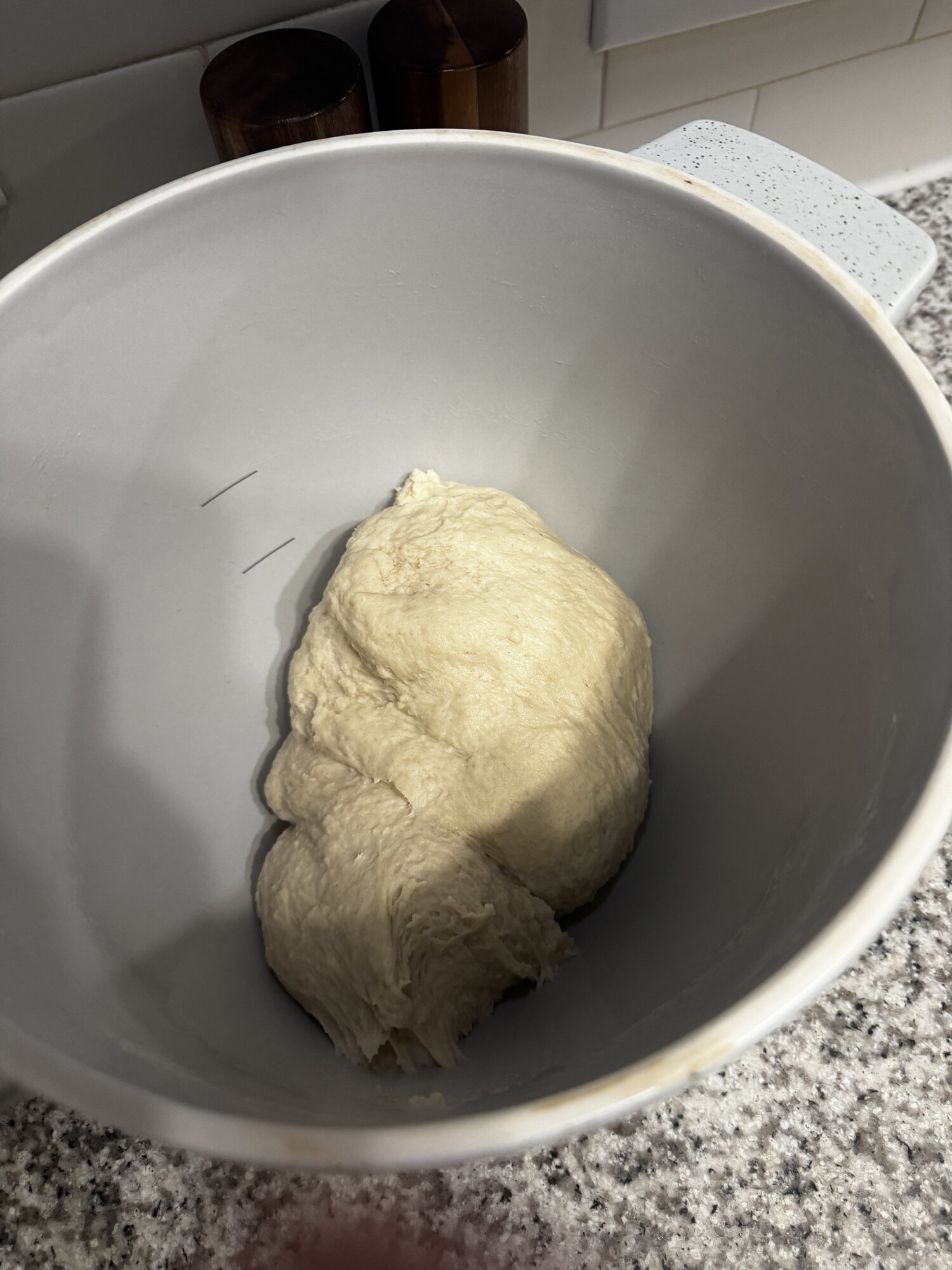
One other difference from Bake001: this recipe does not call for an autolyze or folds.
The loaf turned out well, but those are two things I would like to experiment with next time. A short autolyze may help the flour hydrate and improve dough development. One or two folds during bulk may help strengthen the dough and possibly give the loaf a little more height.
Bulk Fermentation
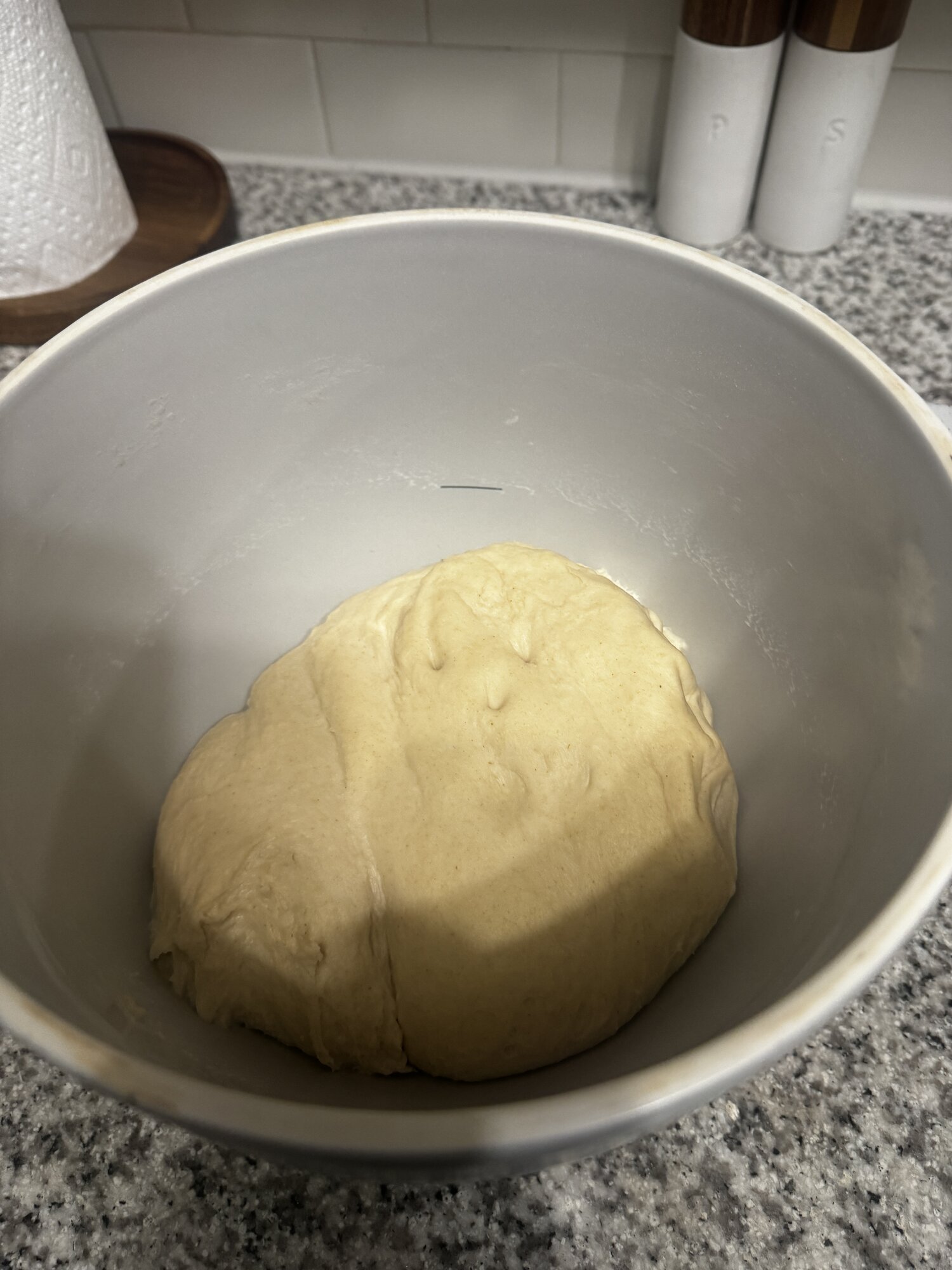
Bulk started at 8:00 AM.
The dough started warm at 85°F and slowly dropped into the mid-70s over the next few hours.
By early afternoon, it was clearly changing. The dough was smoother, fuller, and starting to look like it knew what it was doing.
At 3:00 PM, it was getting close.
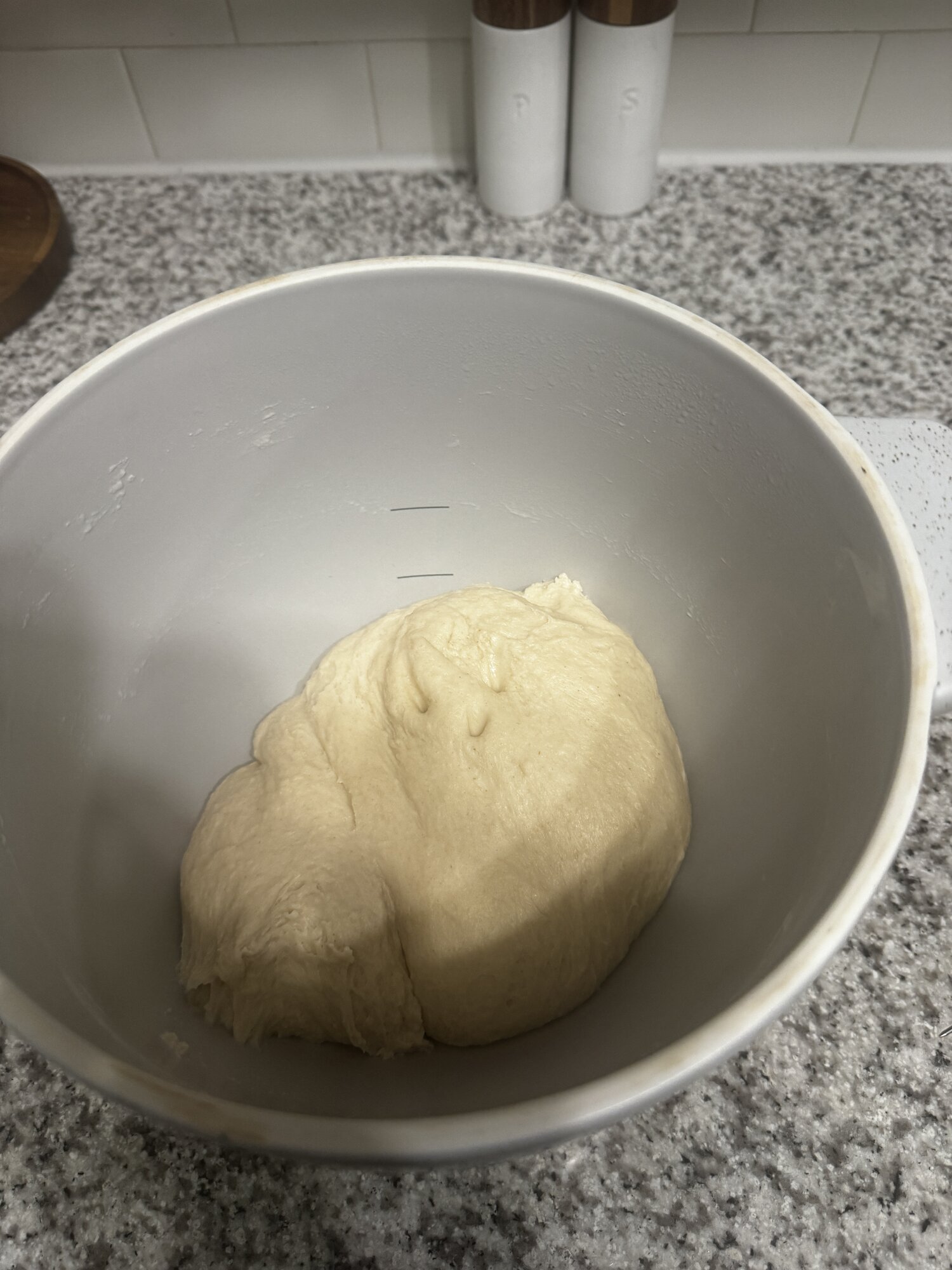
At around 4:15 PM, I made the call to shape. The dough had developed well, and waiting several more hours wasn't going to fit into the schedule.
Into the loaf pan it went.
Now came the final proof.
The Overnight Fridge Decision
The final proof was the part where the dough reminded me who was actually in charge.
By 9:00 PM, the loaf had risen nicely, but it still had more work to do. My goal was for the dough to rise above the top of the pan, and it had not reached that point yet.
At that point I had two choices:
- Stay up and stare at bread for another couple of hours.
- Put the loaf in the refrigerator and let it continue tomorrow.
The refrigerator won.
The next morning, the loaf came back out and continued proofing at room temperature.
At 5:00 AM, it was out of the fridge.
By 9:10 AM, it had finally reached the top of the pan and passed the poke test. The dough had a slow release and was ready to bake.
Bread Pitt had decided that sleeping in was part of the recipe.
Bake Day
The loaf went into the oven at 9:28 AM after a milk wash.
The recipe called for 45–50 minutes with a final temperature of 190–195°F.
At 40 minutes, the loaf was sitting at 172°F.
Close, but not there yet.
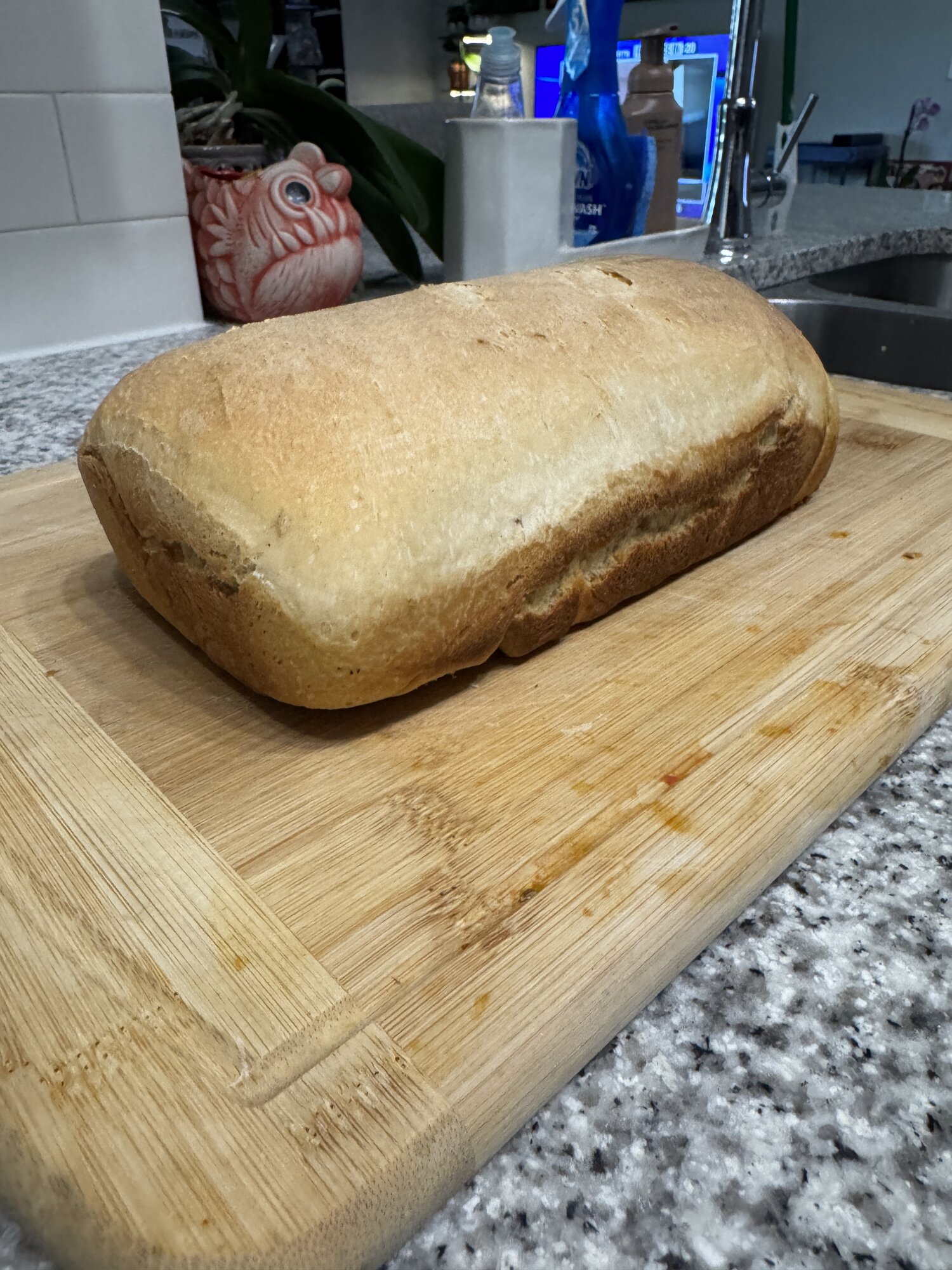
Five minutes later, it reached 191°F and came out of the oven.
The loaf had good color, a nice shape, and released from the pan cleanly.
The Results
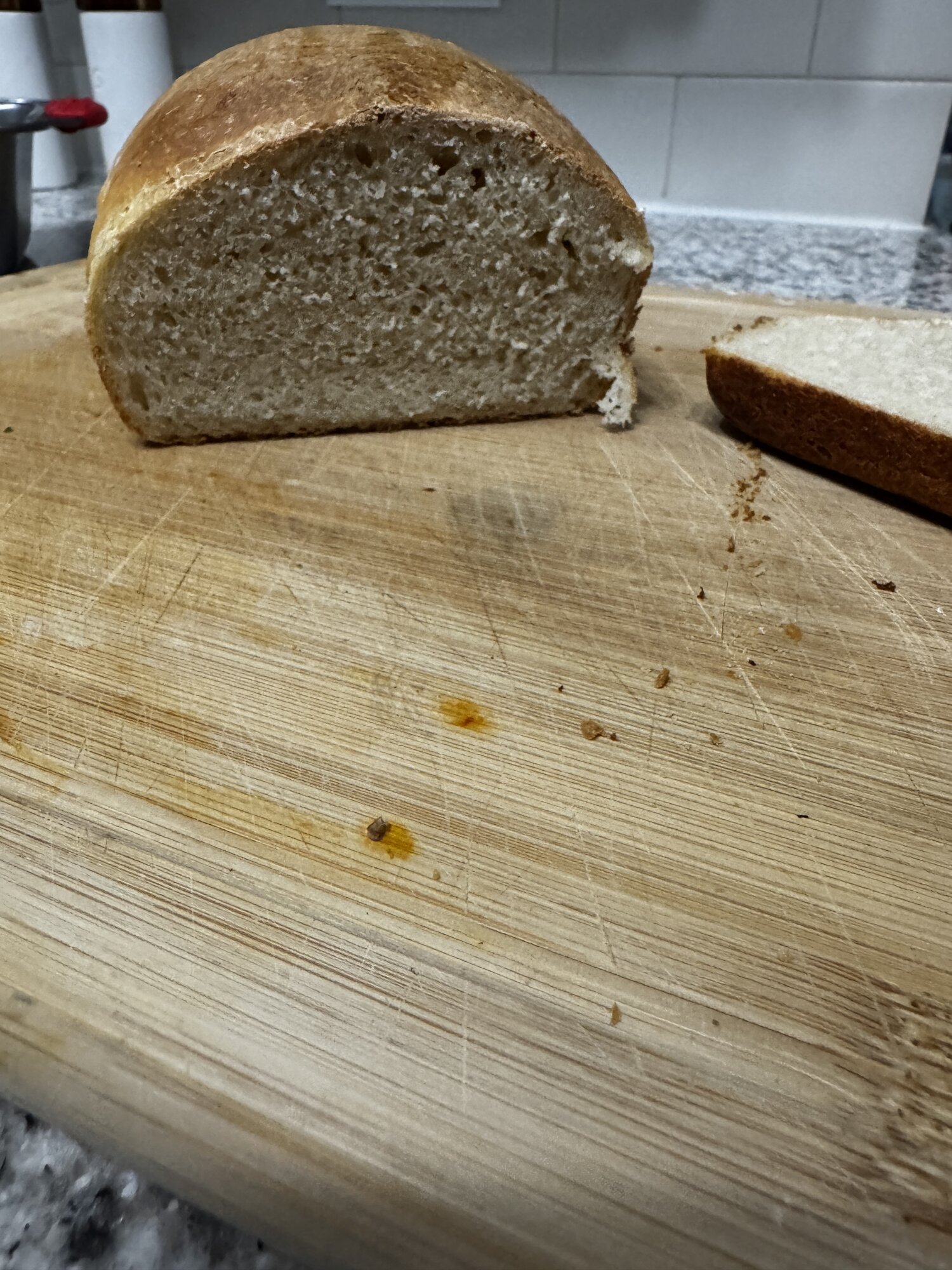
After cooling, the first slice showed exactly what I was hoping for.
A soft sandwich bread crumb.
The texture was good, the crumb was even, and the flavor was excellent. Bread Pitt brought the sourdough flavor through without taking over the entire sandwich.
There are still a couple of things I want to improve.
The bottom of the loaf was a little denser than the rest, and I would have liked a little more rise. The loaf eventually reached the top of the pan, but next time I would like to see it push a little farther above the rim before baking.
Overall, this was a very successful loaf. It made great sandwiches, great toast, and disappeared pretty quickly.
Lessons Learned
A few things stood out from Bake002:
- Scalded milk is another reminder that every ingredient has a job. The trick is managing the temperature after that step.
- Dough temperature matters. Starting at 85°F changed the fermentation speed.
- The recipe timeline was a guide. The dough made the final decision.
- The refrigerator is a useful tool when bread and real life disagree on the schedule.
- Small process changes may help improve the next version.
For the next attempt, I would experiment with:
- Cooling the milk mixture longer before mixing
- Adding a short autolyze
- Adding one or two folds during bulk fermentation
- Letting the final proof continue a little farther
The loaf was already good. These changes are about chasing a little more rise and seeing what happens.
Bake002 Score
8.5/10 👍
Excellent flavor.
Good texture.
A very successful sourdough sandwich loaf.
Bake002 reinforced the same lesson Bake001 started:
The recipe gives you a plan.
The dough gets the final vote.